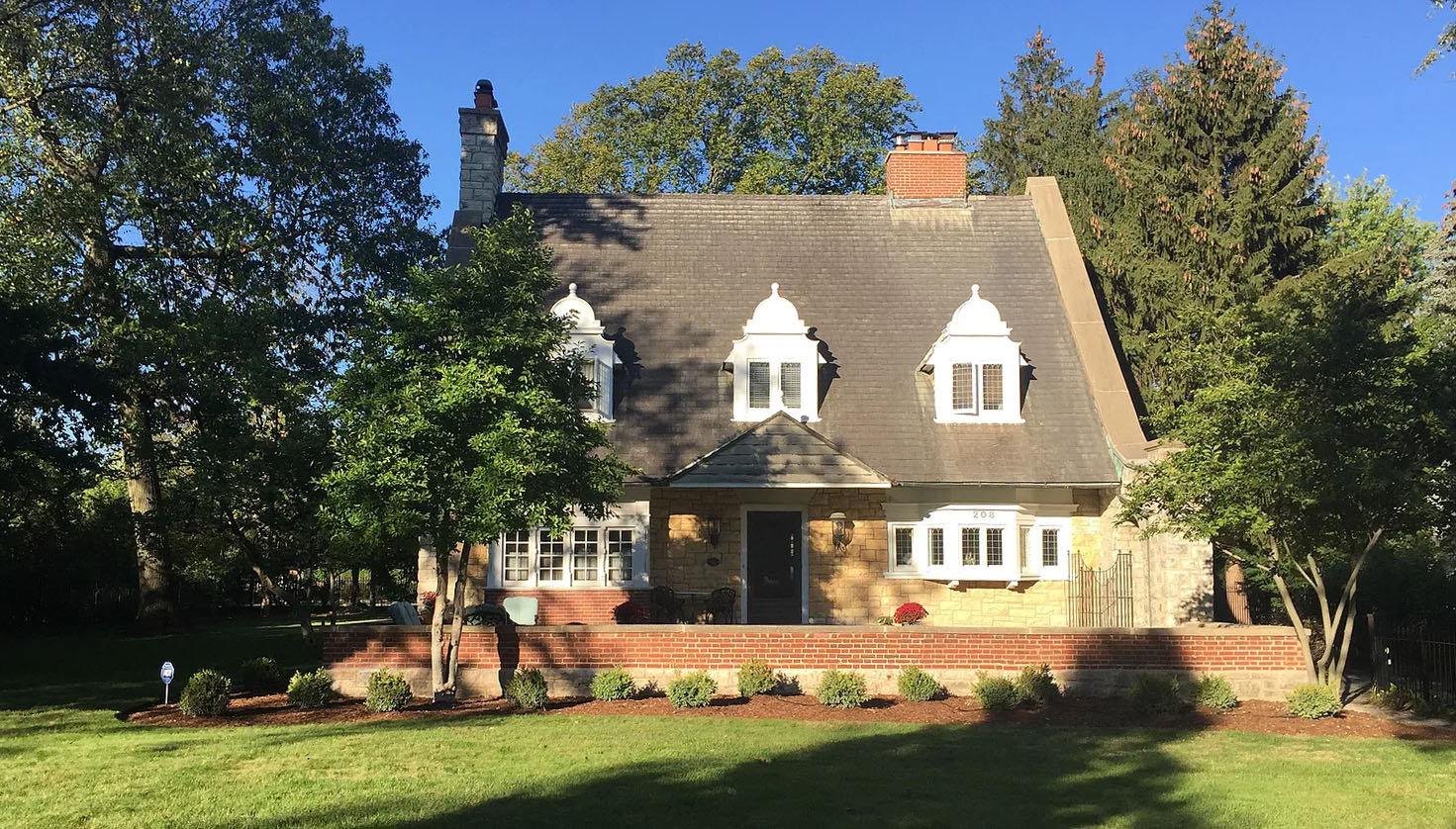
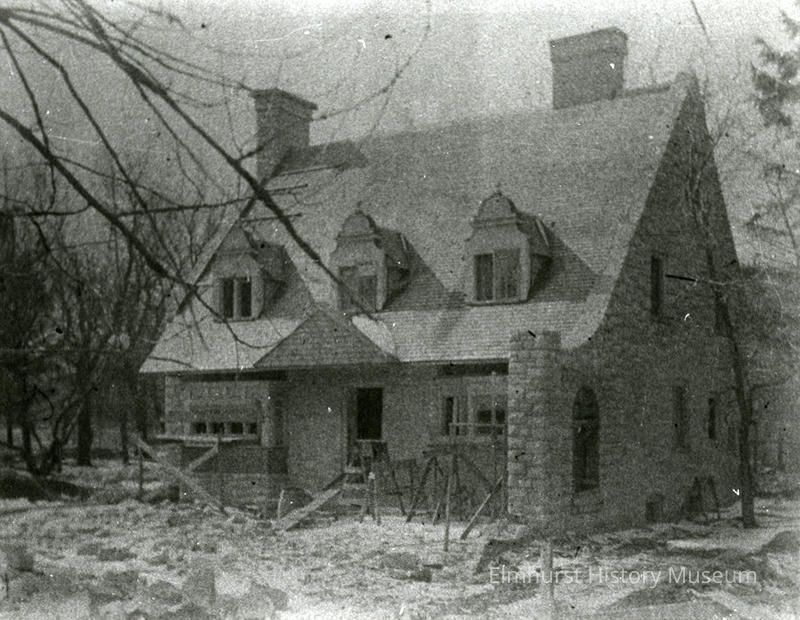
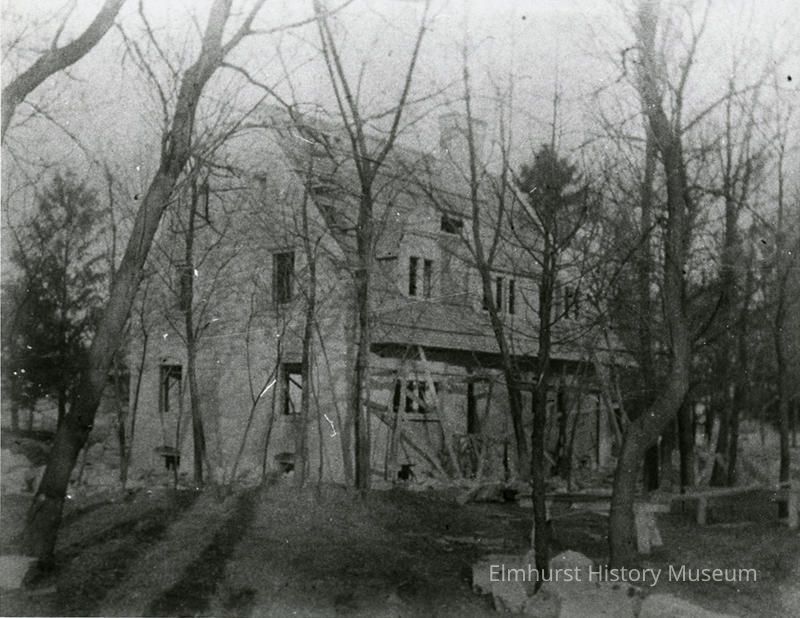
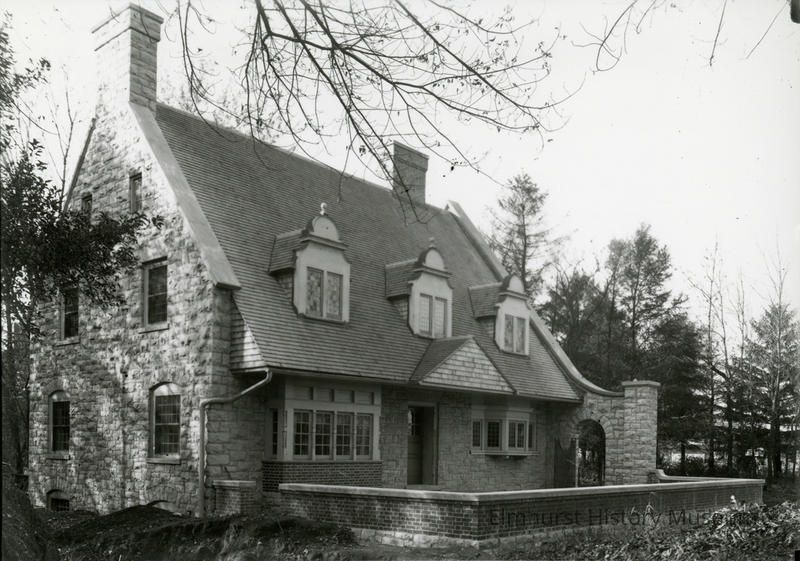
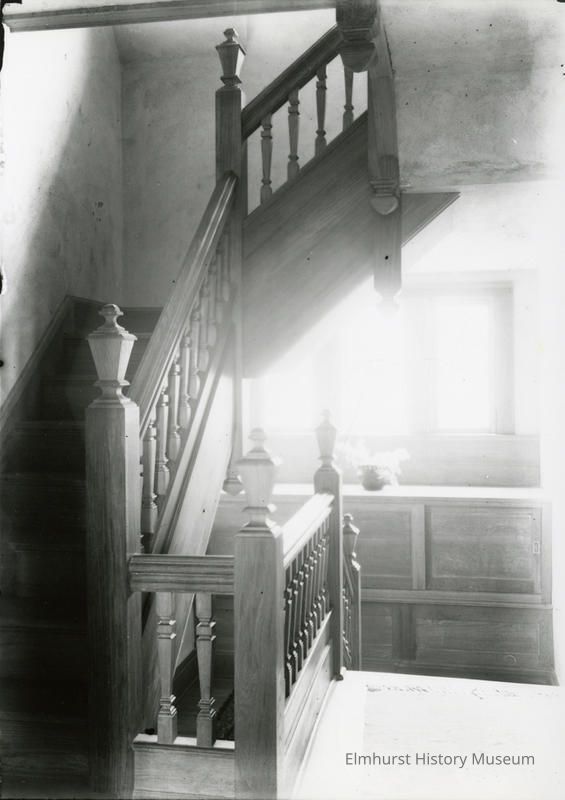
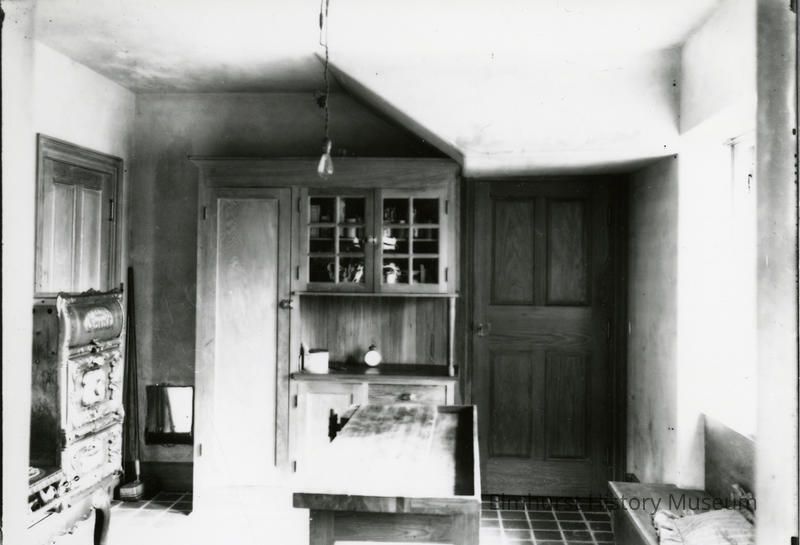
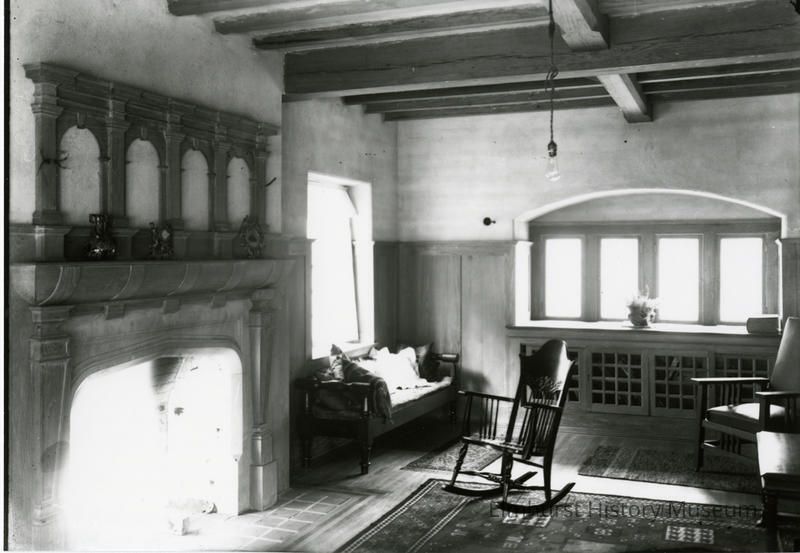
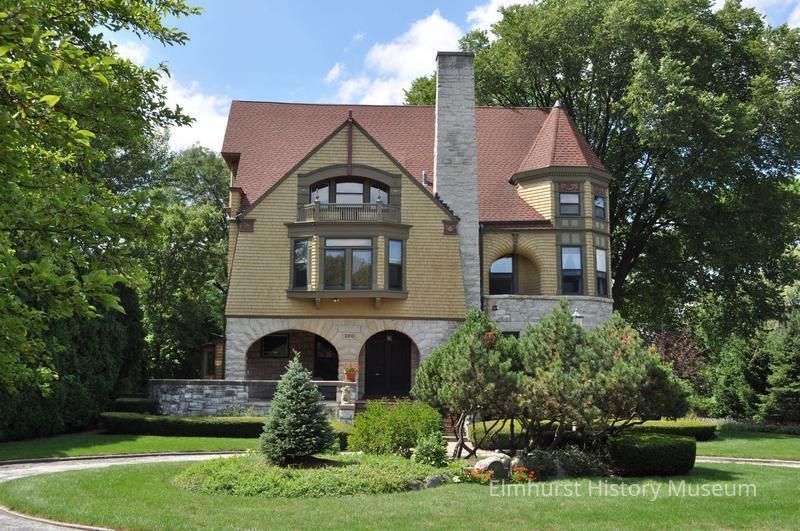
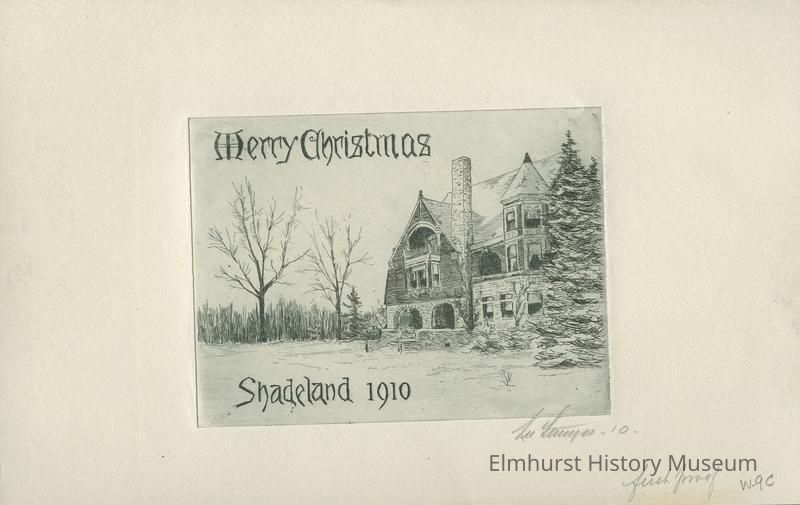
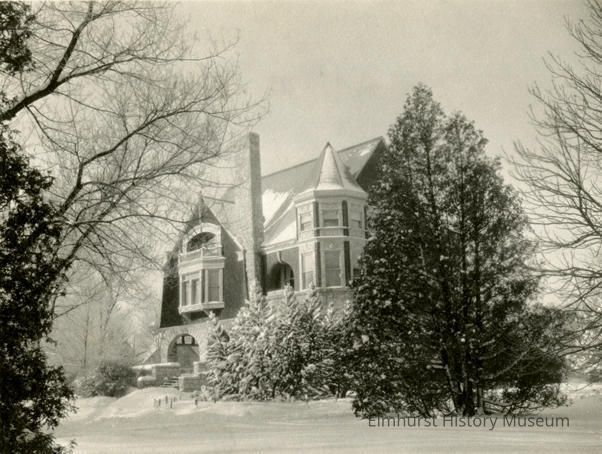
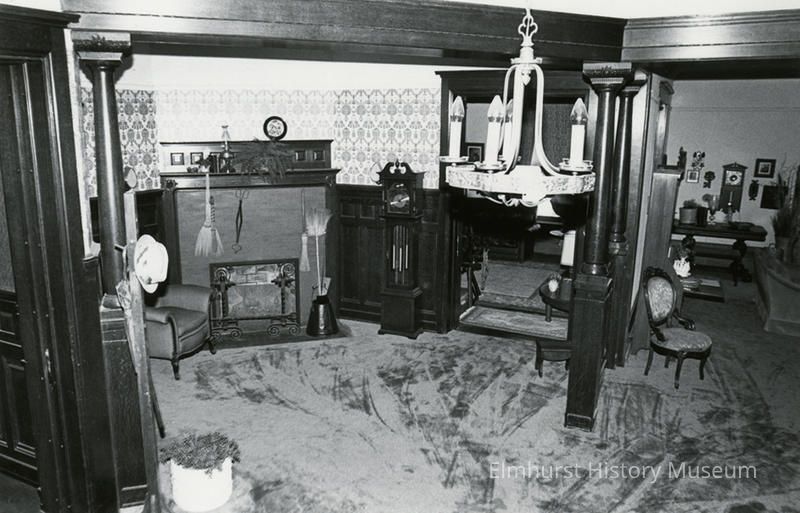
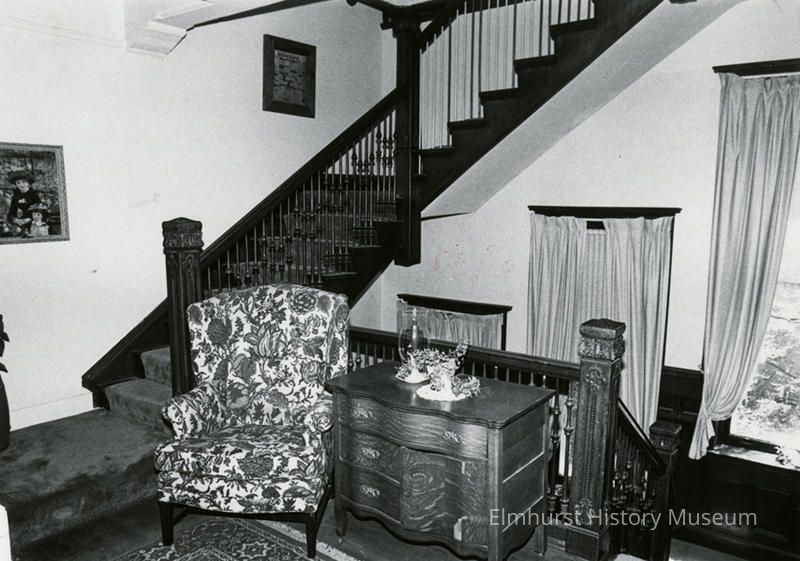
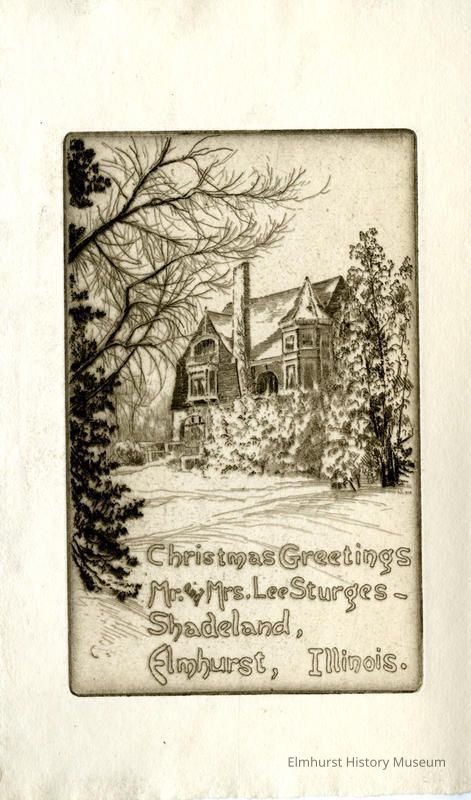
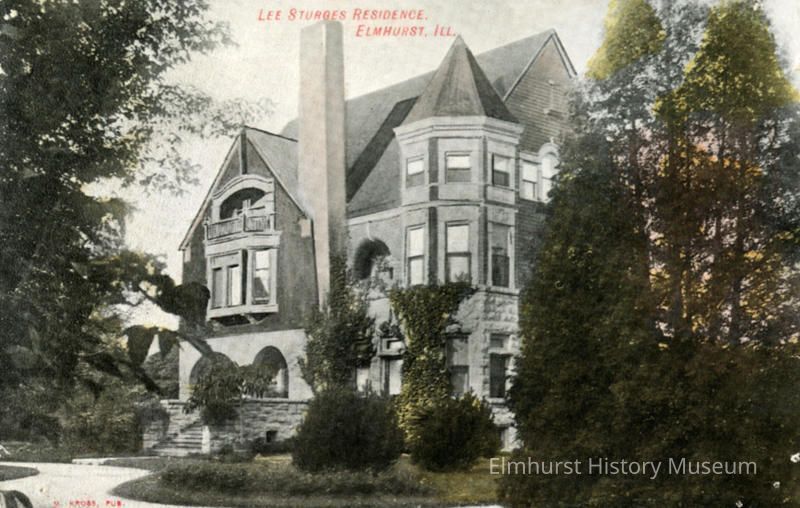
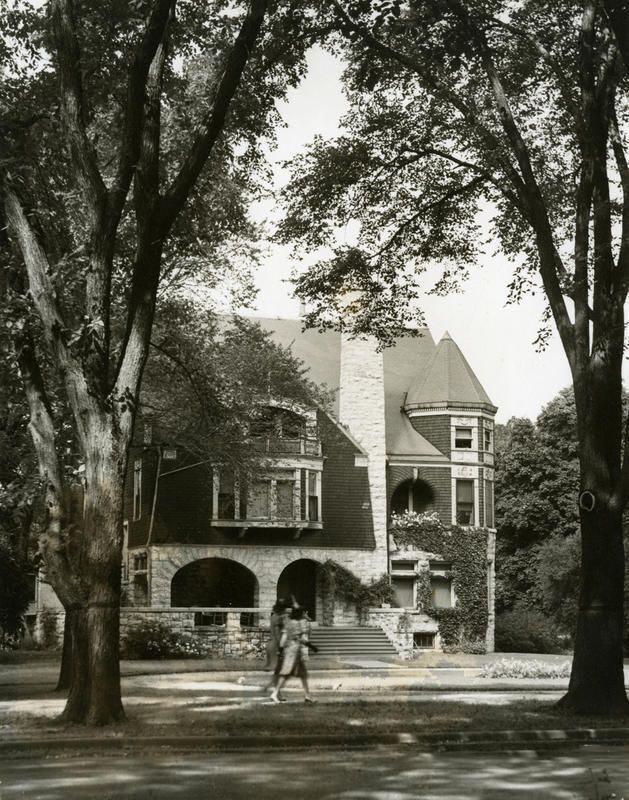
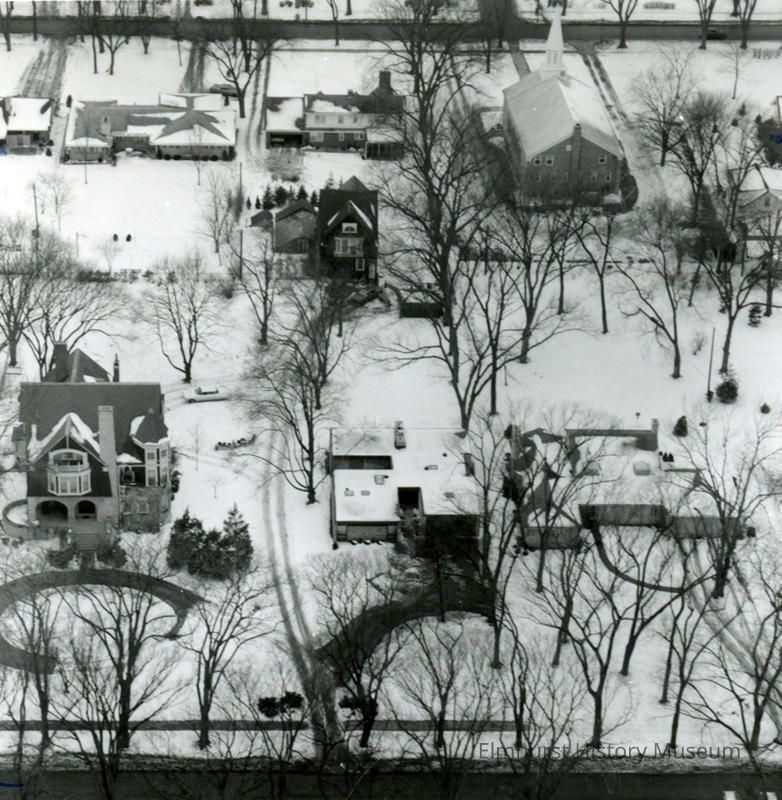
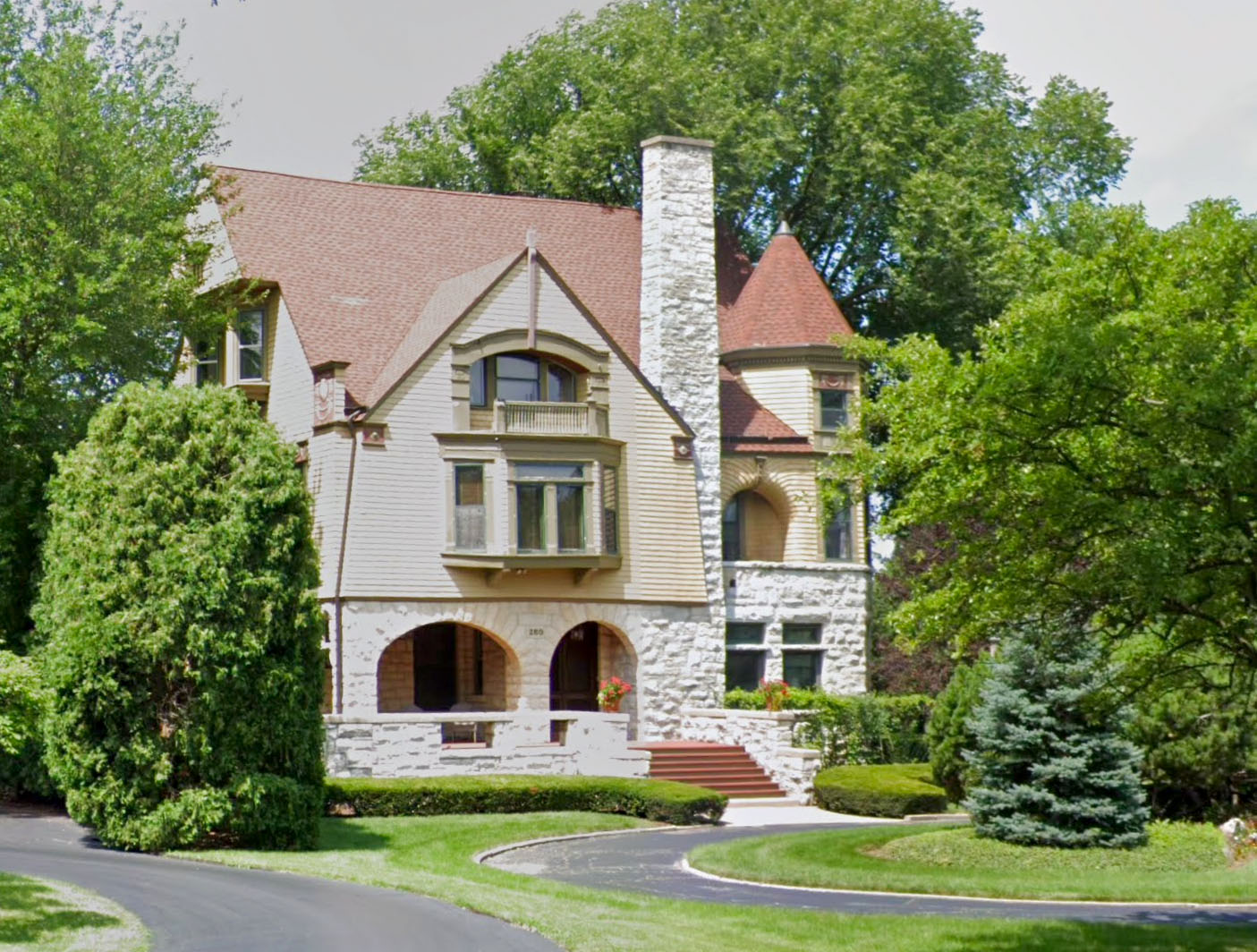
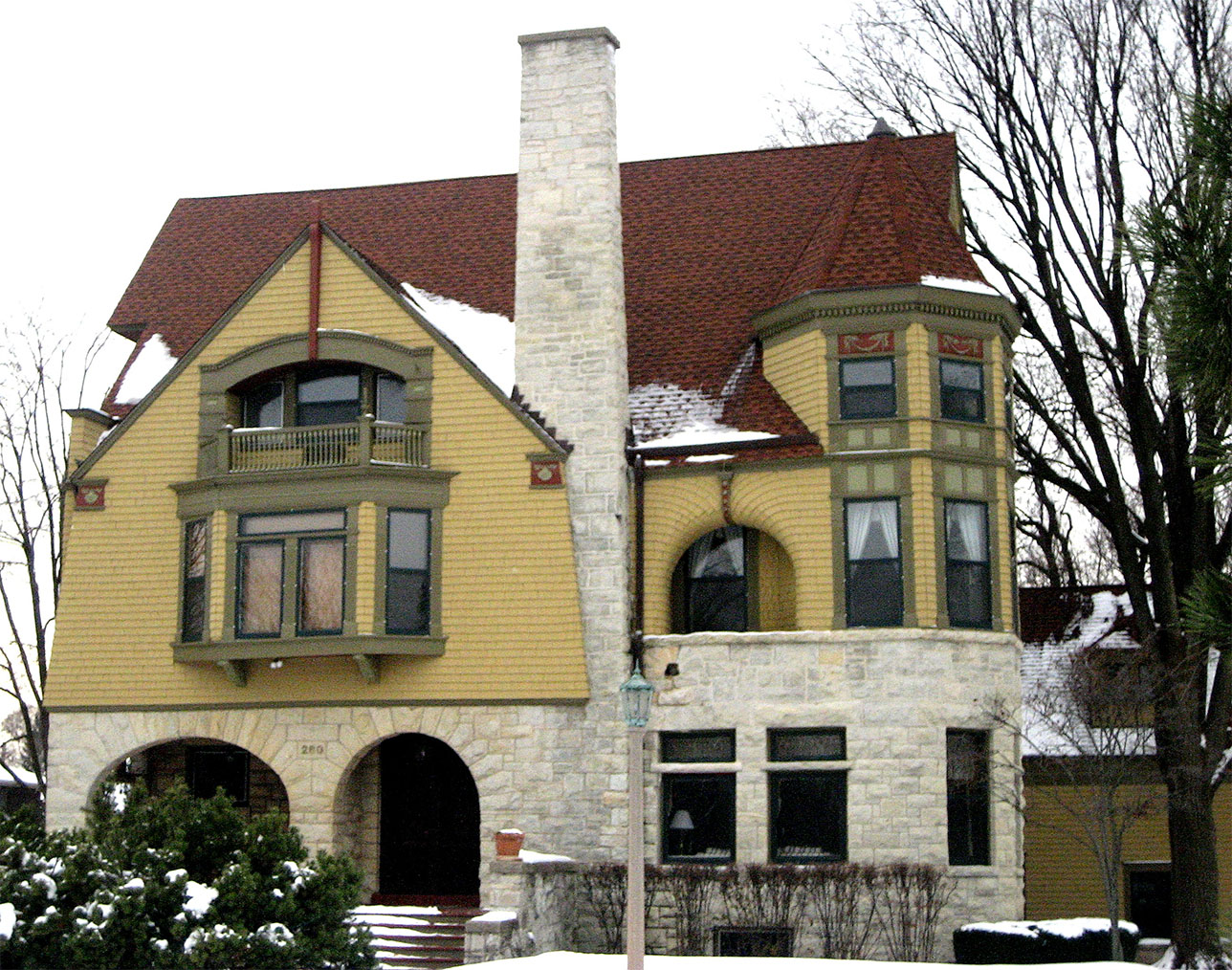
Built in 1892, this impressive Shingle-Style residence, known as Shadeland, stands proudly at 280 S. Cottage Hill Avenue.
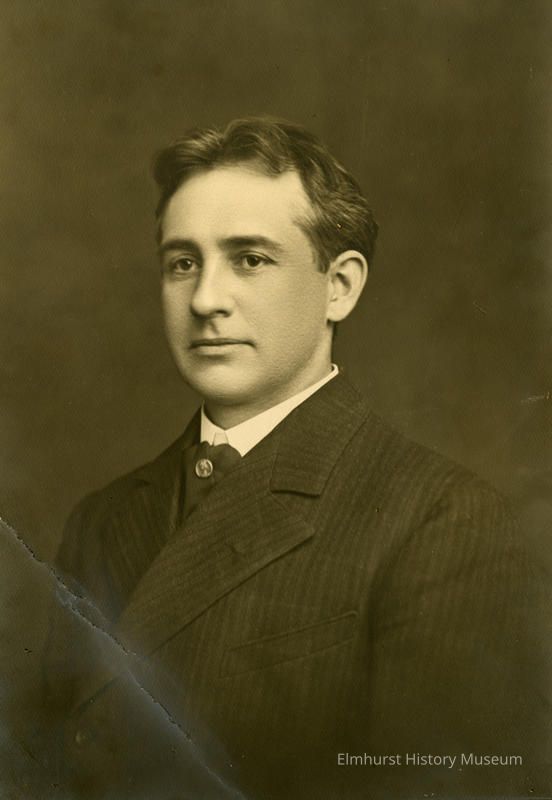
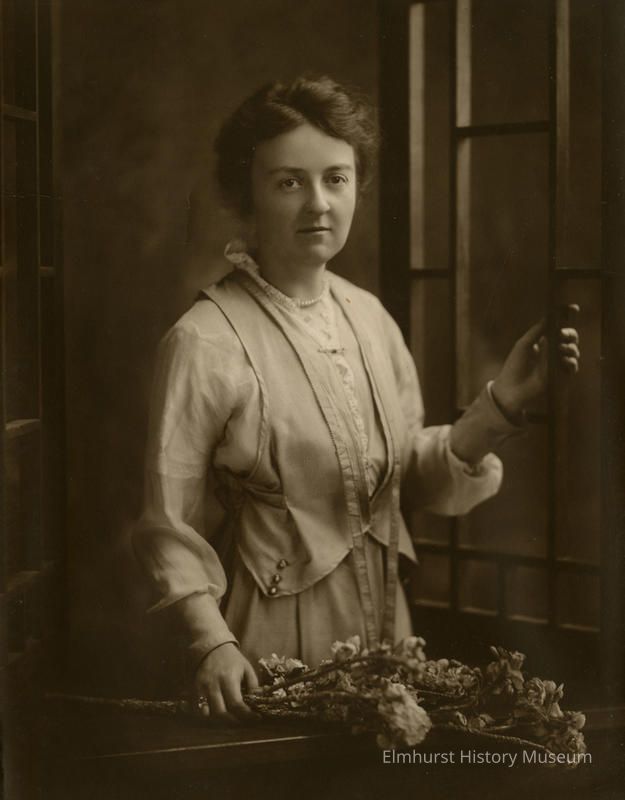
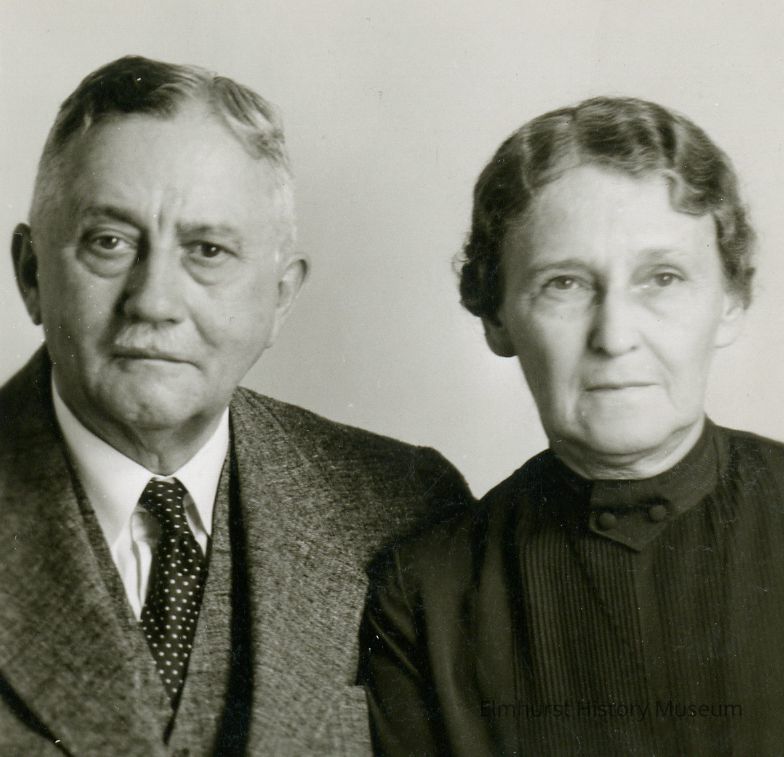
Lee Sturges and his wife, Mary, moved to Elmhurst in 1892 and built Shadeland that same year, raising their three children there. Sturges personally designed the home and oversaw its construction with the help of an architect.
A man of many talents, Sturges was a successful businessman, inventor, and internationally recognized artist. In 1893, he founded the Illinois Manufacturers Association and went on to secure patents for 20 inventions, including the personal-sized etching press in 1916. This innovation helped revive the art of etching by allowing artists to work independently. Despite his business endeavors, Sturges remained deeply devoted to art and even added a studio to his home. He became an internationally known artist and etcher, celebrated for his depictions of outdoor scenes. Over 400 of his works are cataloged in his complete collection, with many housed at the Elmhurst History Museum.
Shingle-Style architecture is defined by its continuous, flowing “skin” of wooden shingles that seamlessly wraps around corners and curves over towers and porches, giving the home a sculptural and rustic appearance. While similar in shape and form to the Queen Anne style, Shingle-Style homes feature minimal decorative detailing, allowing the natural texture of the shingles to shine. Popular between 1880 and 1900, the style emphasizes horizontal lines and harmony between the home and its natural surroundings.
Shadeland’s solid base is constructed of rough-faced ashlar limestone, complemented by a striking limestone chimney that anchors the center of the front façade. The recessed front porch, with its graceful round-arch openings, is echoed in the second-story sleeping porch above. Remarkably, the home has undergone only minor alterations and retains an exceptional degree of historic integrity.
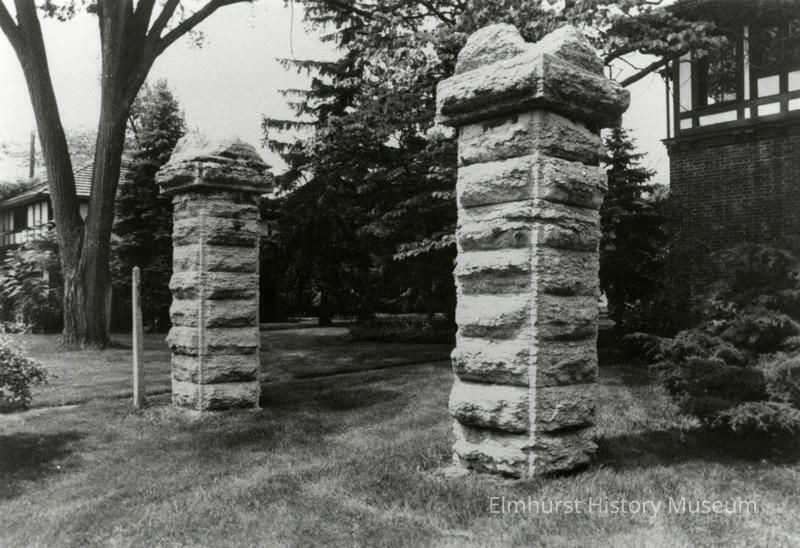
Sturges’ father, Frank Sturges, also built a notable home in the early 1890s on a generous 15-acre estate bounded by St. Charles Road, Church Street, York Street, and Cottage Hill Avenue. The estate was subdivided in the late 1920s to make way for residential development, and the original home was demolished. Today, two historic stone pillars — once marking the entrance to the Frank Sturges estate — can still be seen in a yard at the southwestern intersection of Elmwood Terrace and York Street.
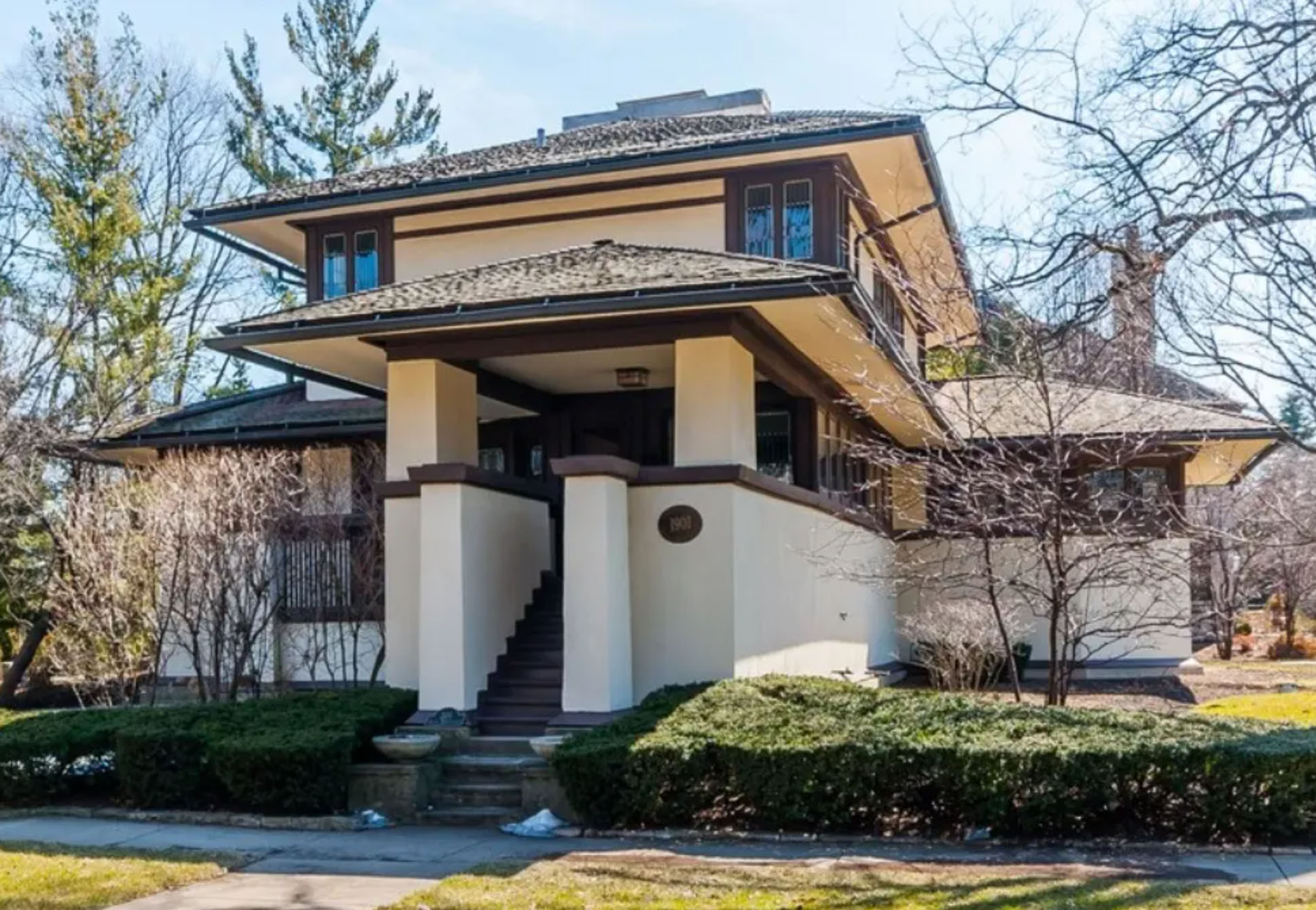
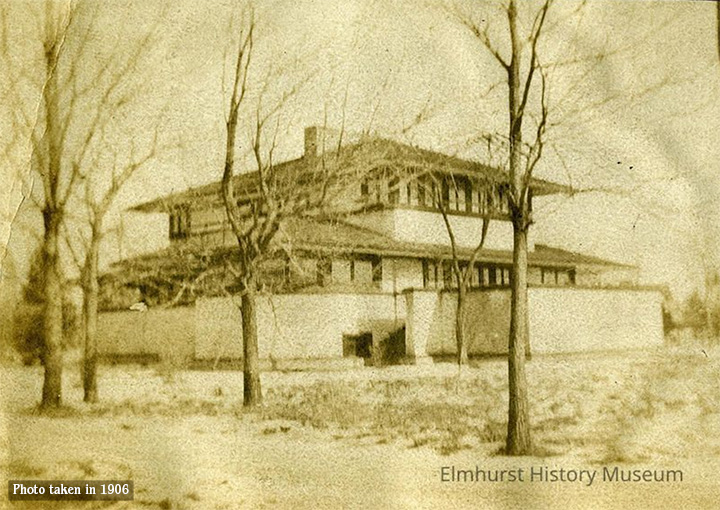
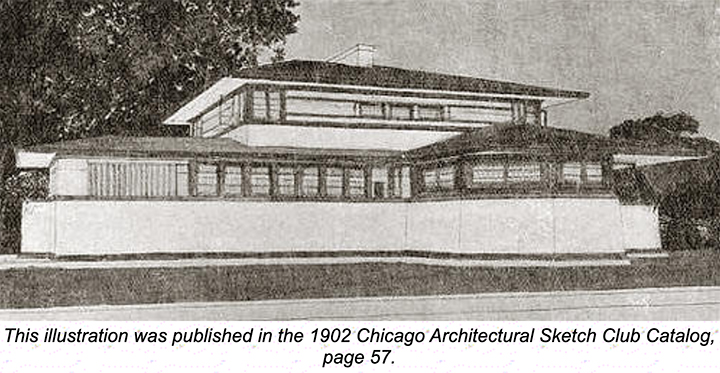
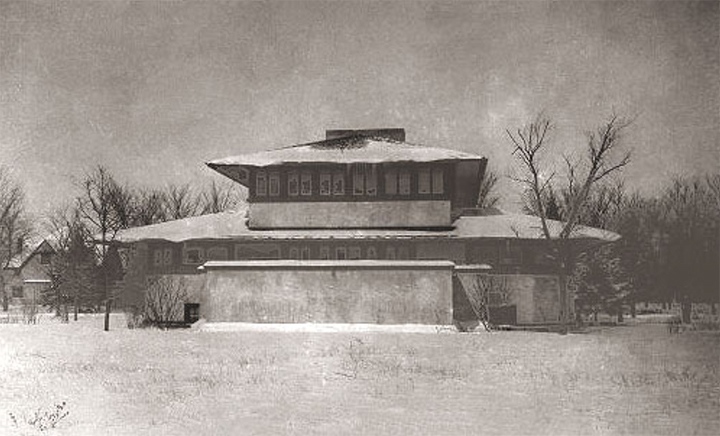
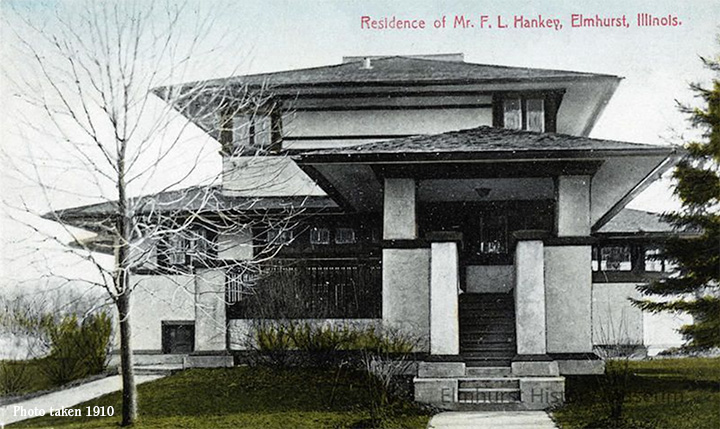
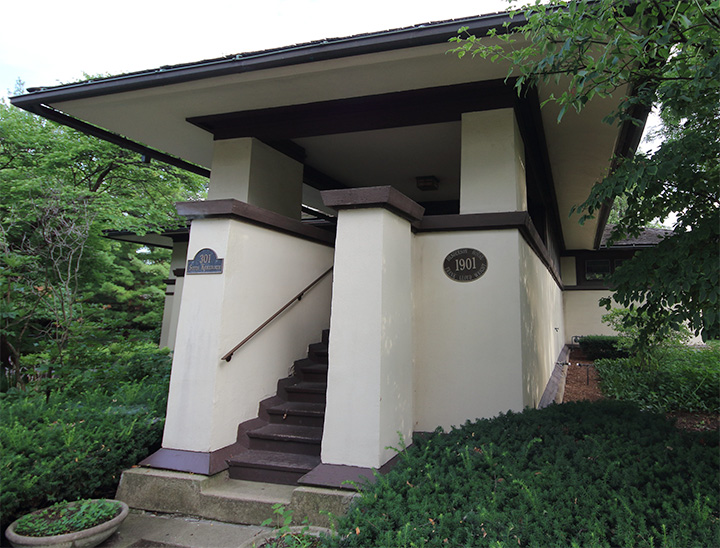
Listed on the National Register of Historic Places, this early work of renowned architect Frank Lloyd Wright can be found at 301 S. Kenilworth Avenue.
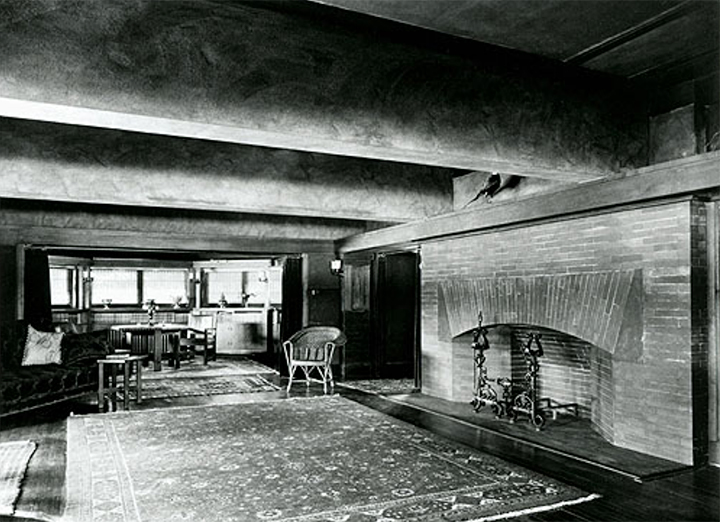
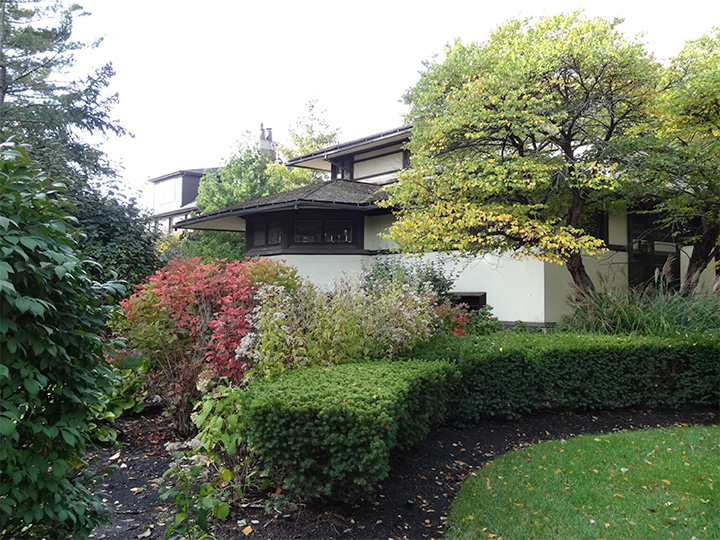
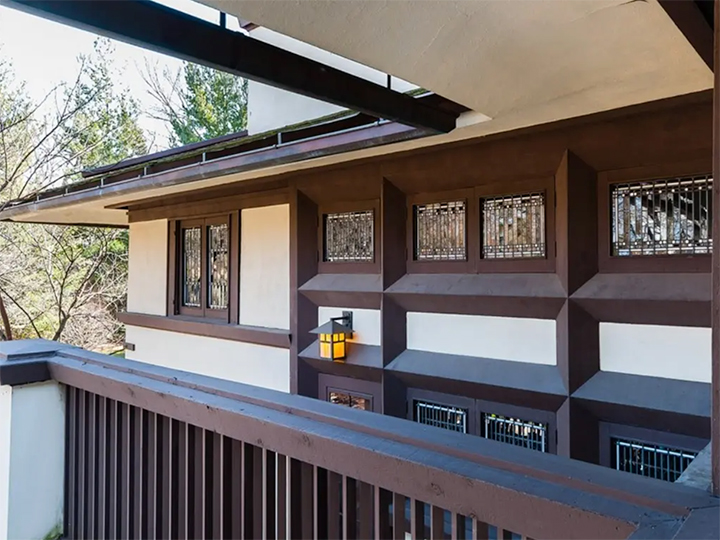
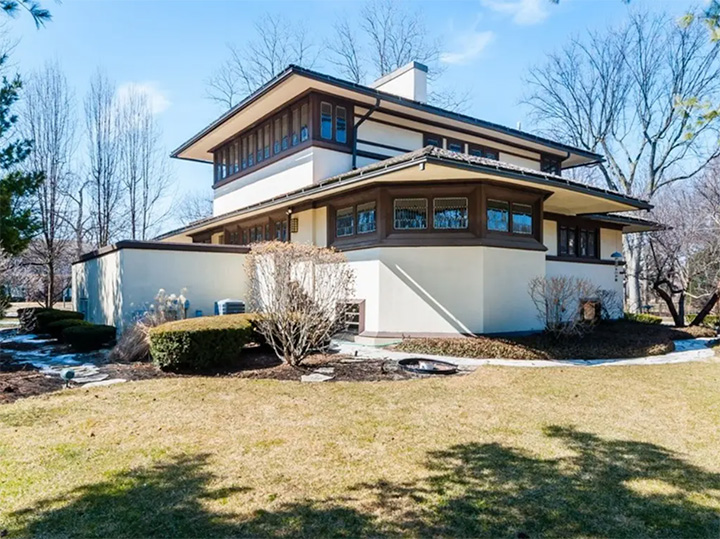
The Henderson House was one of Frank Lloyd Wright’s earliest Prairie style homes and the only work in Elmhurst. Wright was commissioned to design this home for Chicago businessman Frank B. Henderson, and completed the design while in partnership with architect H. Webster Tomlinson in 1901. Construction of the home was completed in 1905 and incorporates all the elements associated with the iconic prairie style that Wright made so well-known.
Frank Bignell Henderson, who commissioned this home, was born in Cincinnati in 1863. He married his wife Nellie, of Chicago, and they purchased the lot from William H. Emery. They lived in the home until 1908 when they moved to Indiana. The Henderson Family only spent a few short years in this home; but since then there have been several homeowners.
Over the years, the house had seen major alteration; most notably in the 1960s, the homeowners added an enclosed sleeping porch over the south terrace that reportedly infuriated Wright. In 1988, notable stewards of this home were David and Joyce McArdle. The McArdle’s were responsible for the extensive restoration of the home, which they did working with Don Kalec, the director of the Wright Home and Studio in Oak Park. The Henderson House today remains as it was originally designed by Wright with few exceptions.
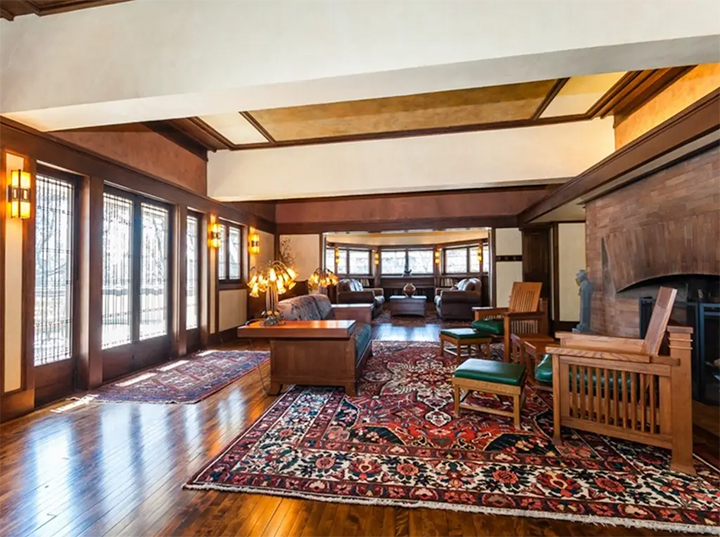
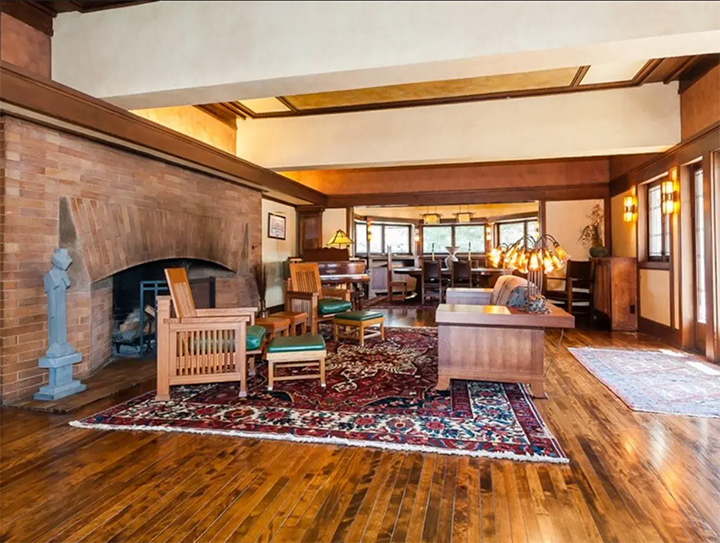
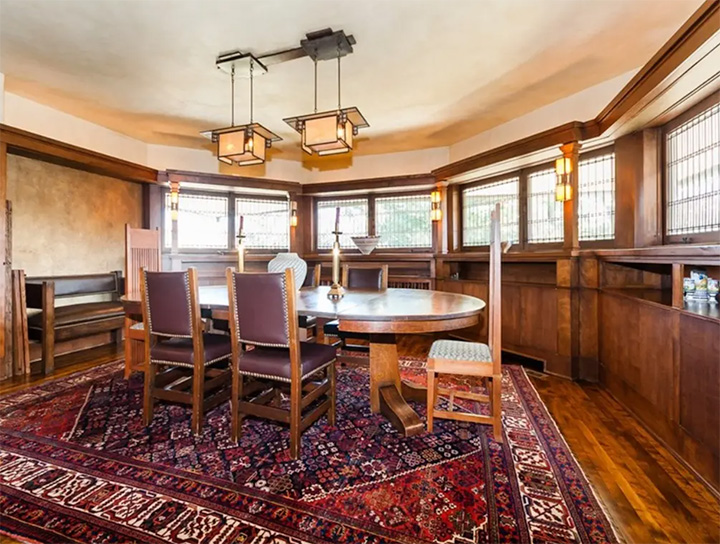
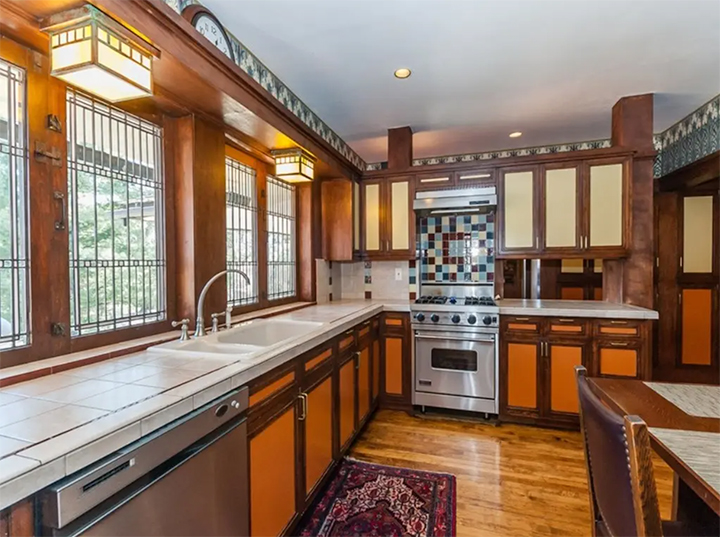
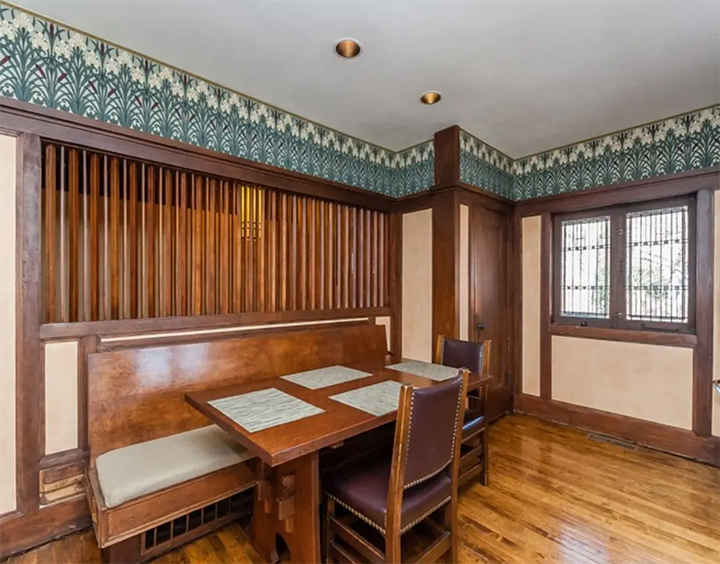
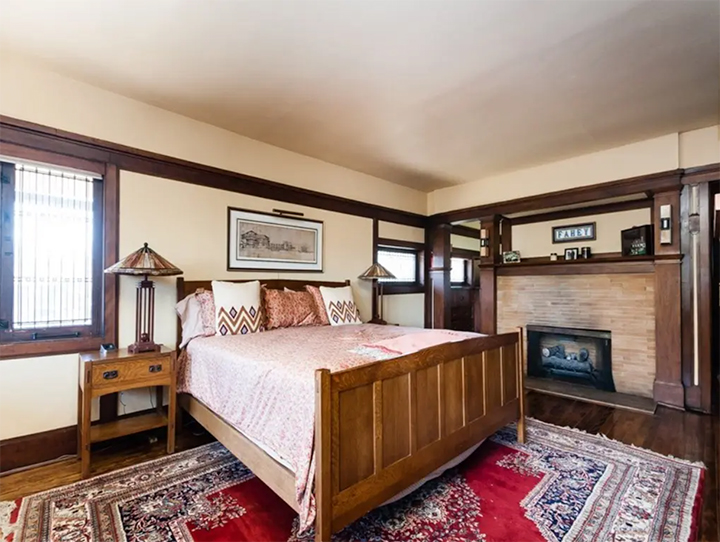
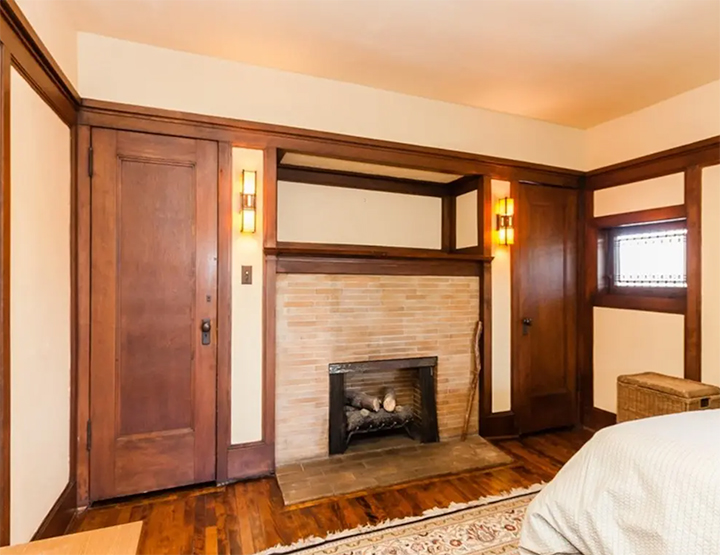
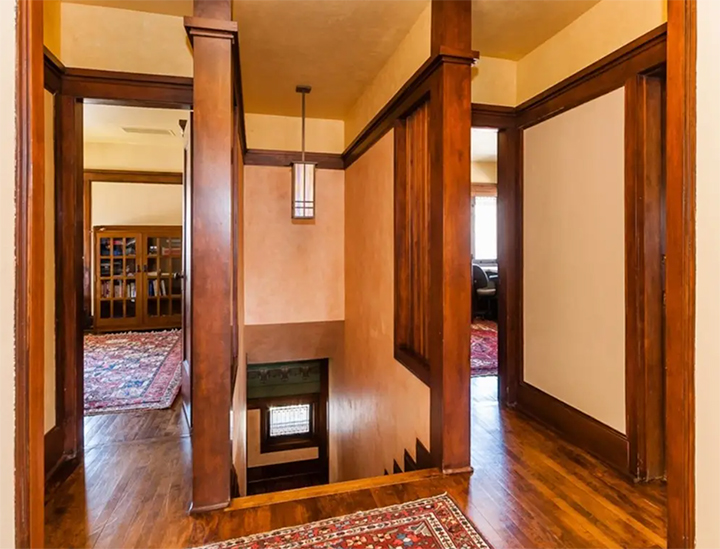
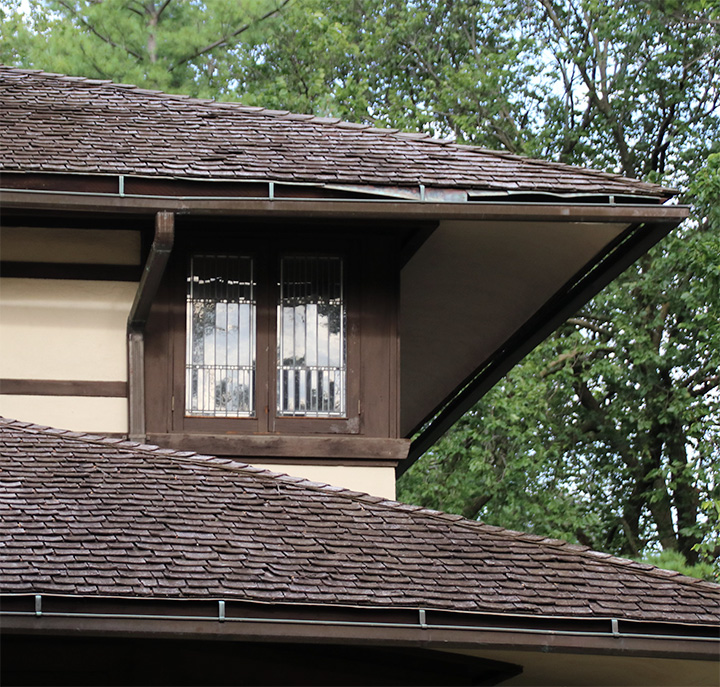
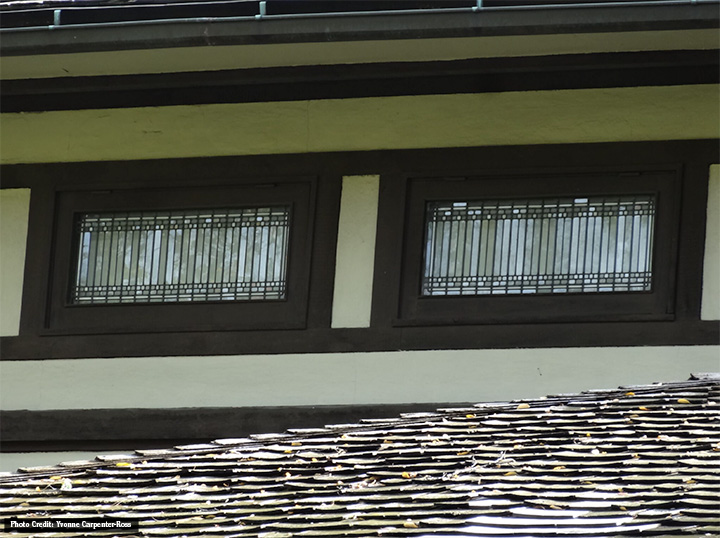
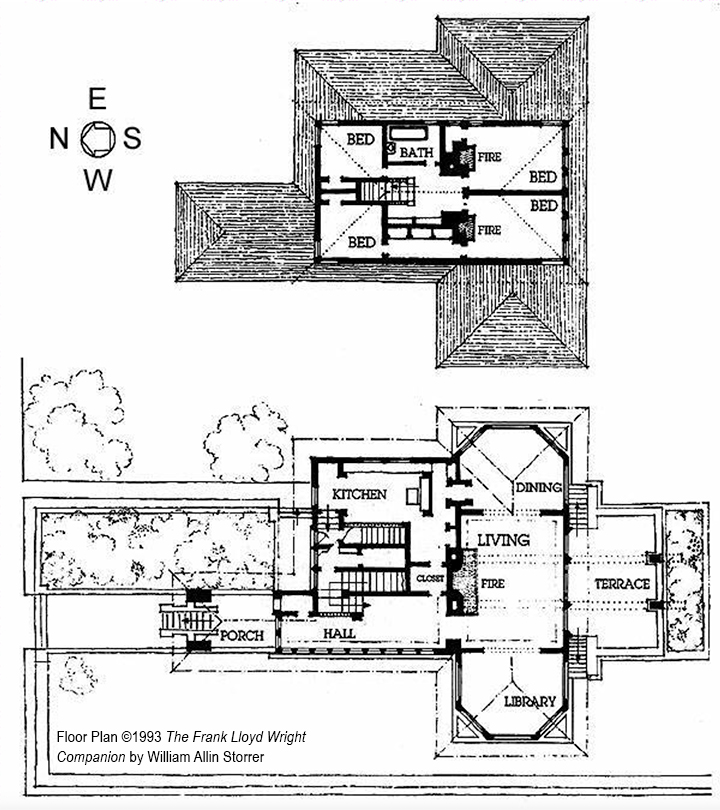
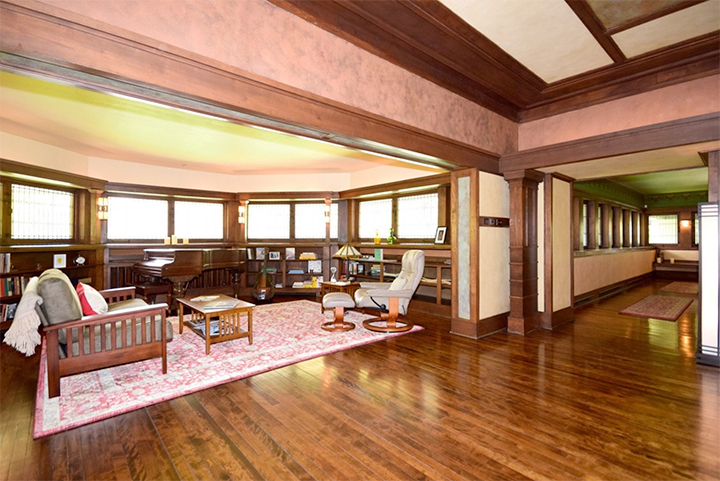
The interior floor plan is similar to that of the Warren Hickox House, although the exteriors are very different. The plan of the house is also similar, in the main living spaces, to the Edwin H. Cheney House of Oak Park. The home has one large space subtly divided into library, living room, and dining room, all in-line. A large veranda off the living room overlooks the over one-half acre of landscaped grounds. The house has over 80 art glass windows, elegant woodwork, three brick fireplaces, and many built-ins.
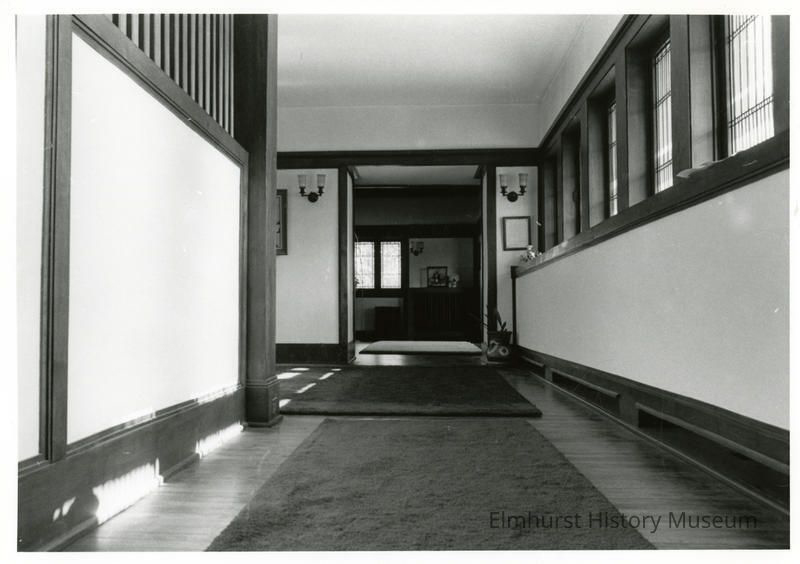
The McArdle’s also handled the legal filing of the articles of incorporation for the newly formed Frank Lloyd Wright Building Conservancy. In 2019, the homeowners of the Henderson House donated a preservation easement to the Frank Lloyd Wright Building Conservancy, which is credited as a major step in preservation protection for this home.
While there is so much to be said architecturally about this home and its famous designer, this feature highlights the preservation history of this home. The impact of this restoration and preservation story can be felt locally, but also nationally and internationally thanks to the creation of the Frank Lloyd Wright Conservancy.
Although this is the only design still standing in Elmhurst, it was not Wright’s only design in the city. According to the Frank Lloyd Wright Trust, the Thomas E. Wilder Stable Building was also designed by Wright’s Oak Park Studio. It has been suggested that Walter Burley Griffin, who played an important role in Wright’s Oak Park Studio, had a heavy hand in the design of the Stable building. The Stable building was demolished in 1941.
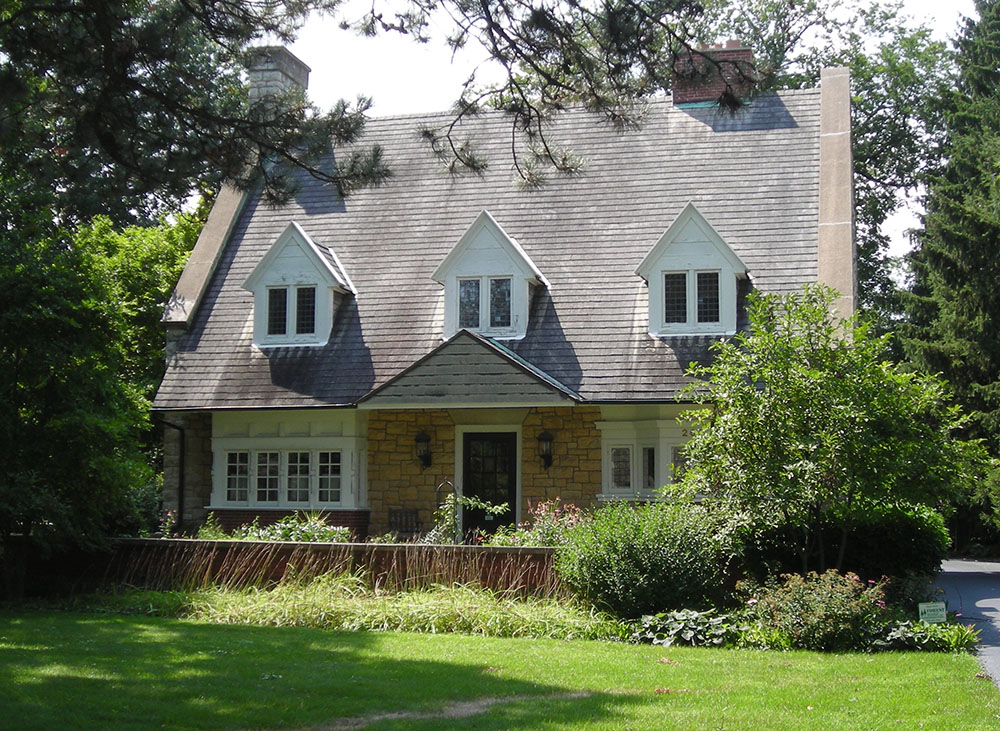
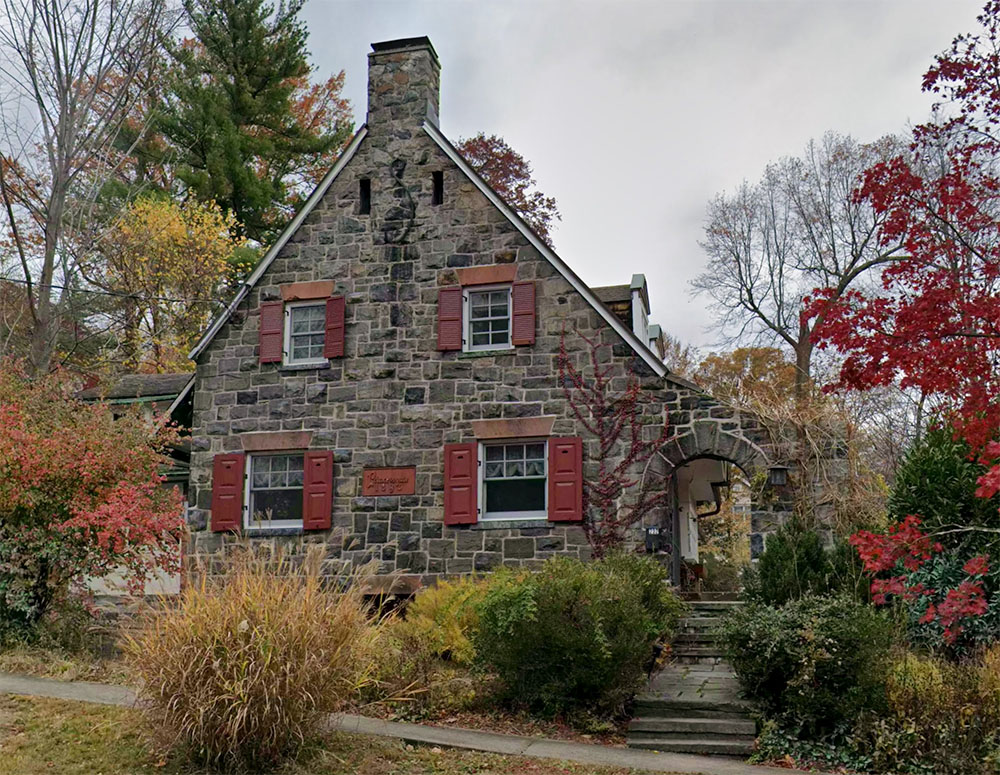
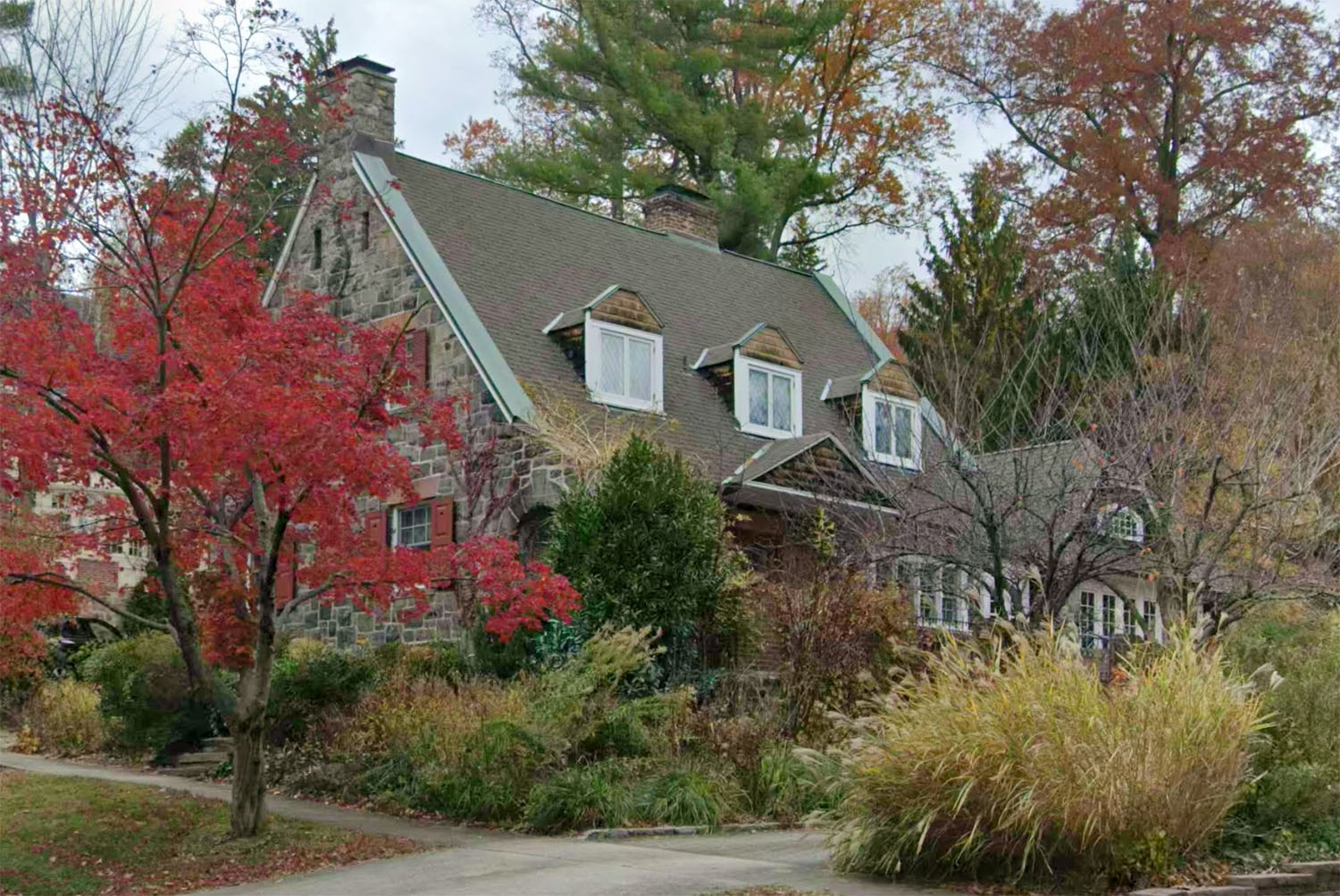
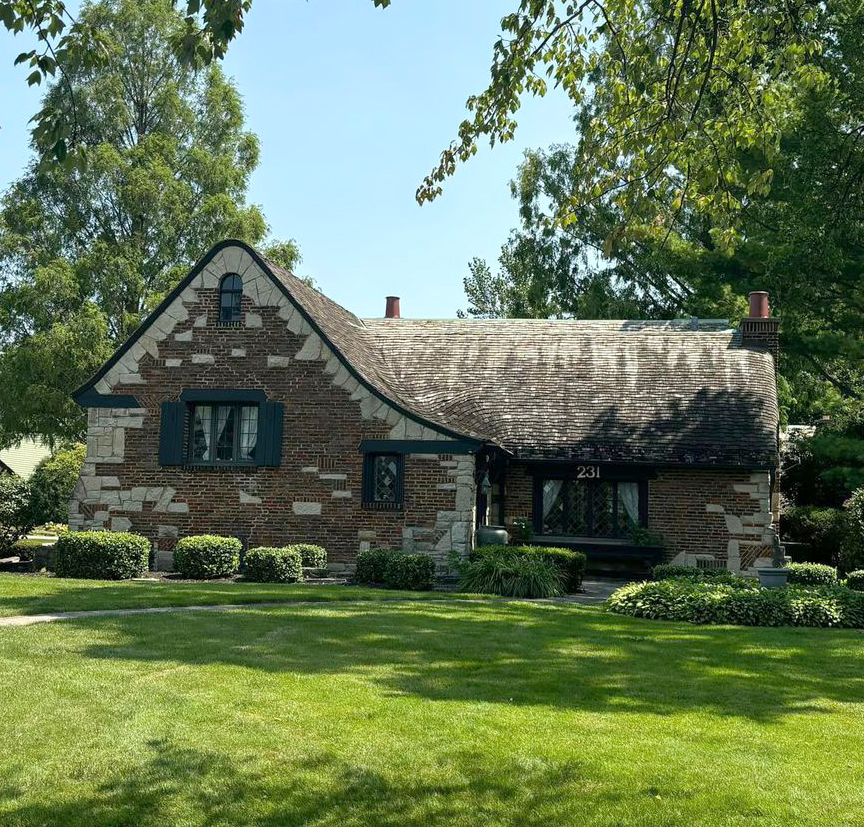
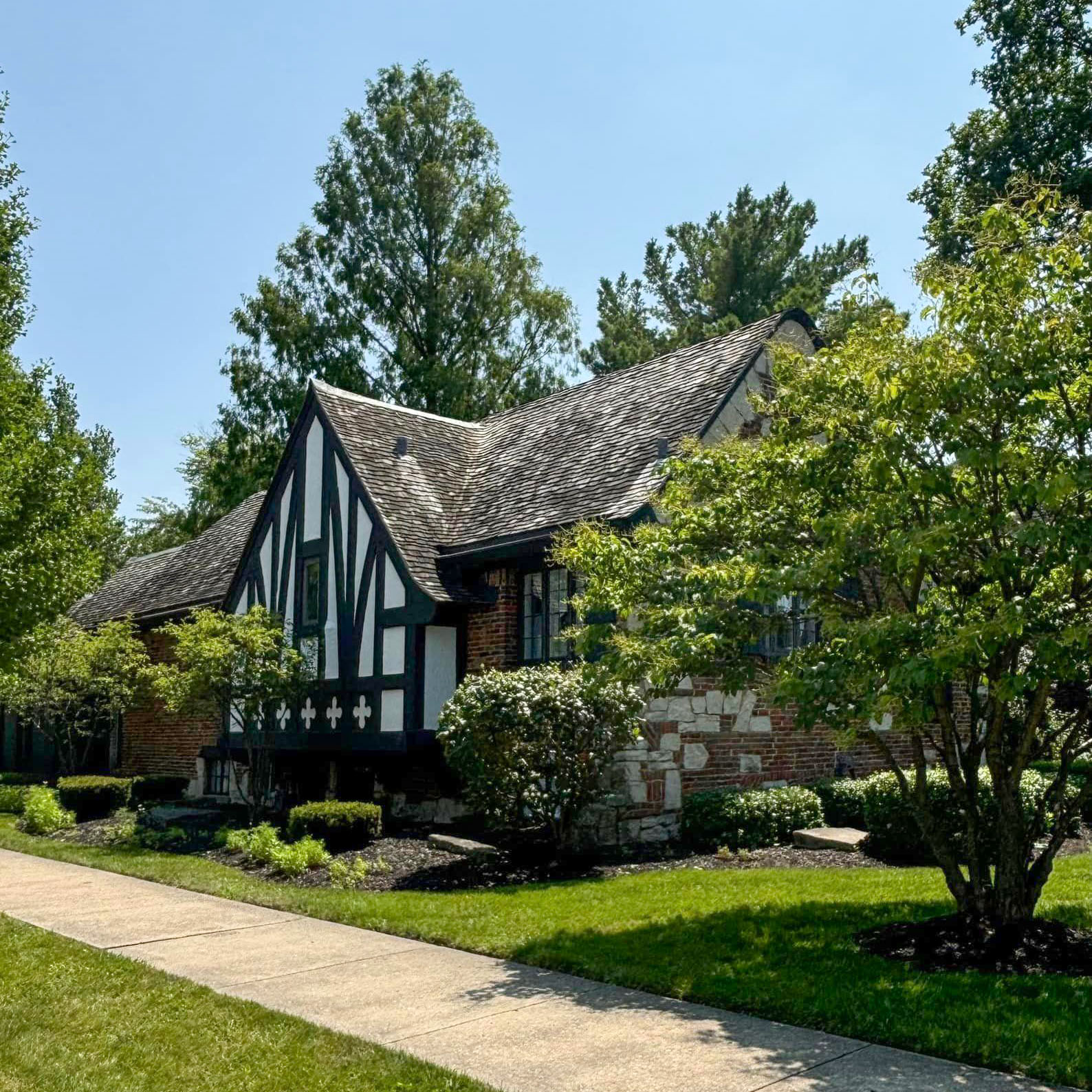
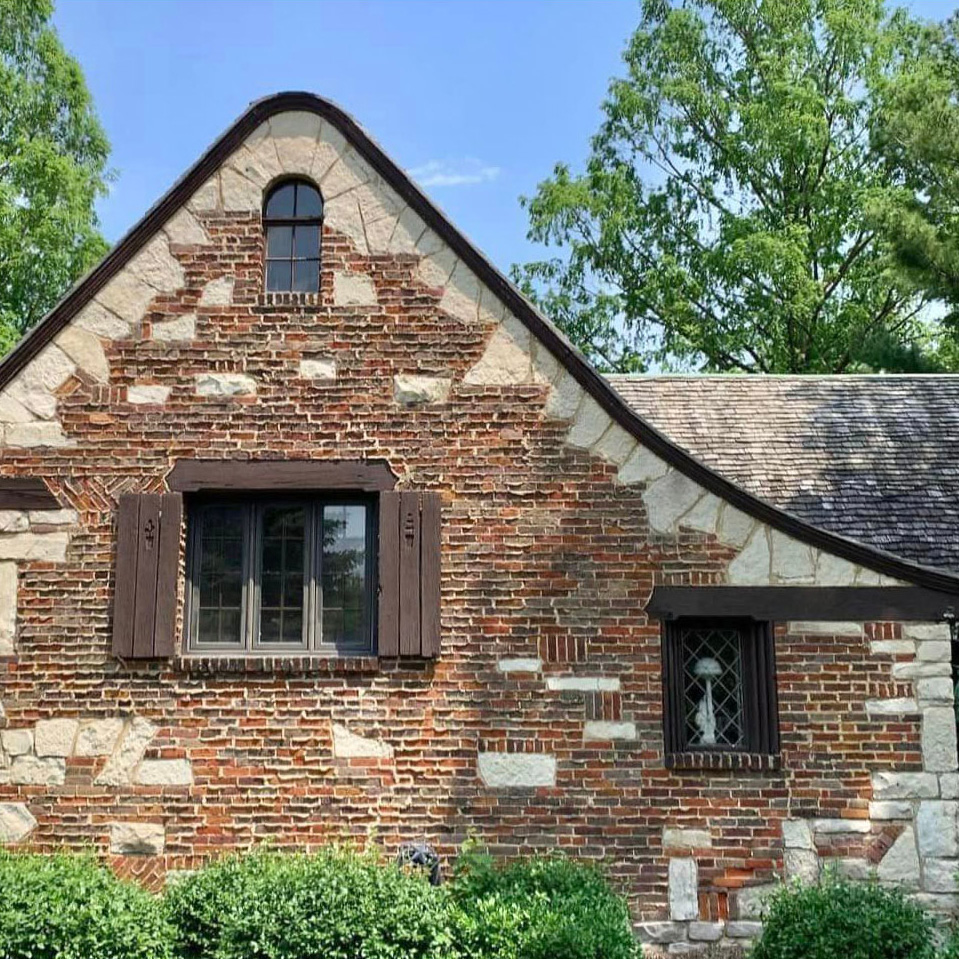
A local historical favorite and recent preservation success story can be found at the Zook House, a Tudor Revival English Cottage, located at 231 S. Arlington Ave.
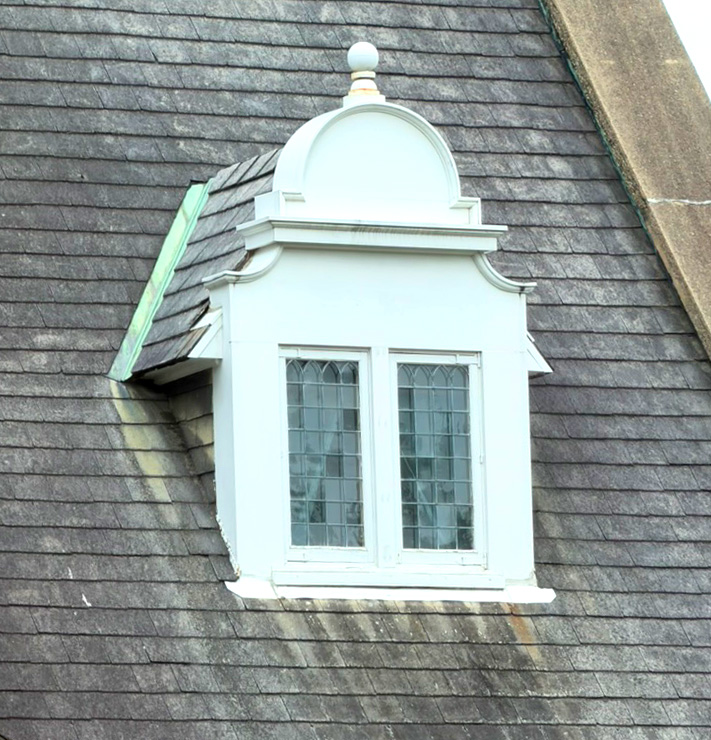
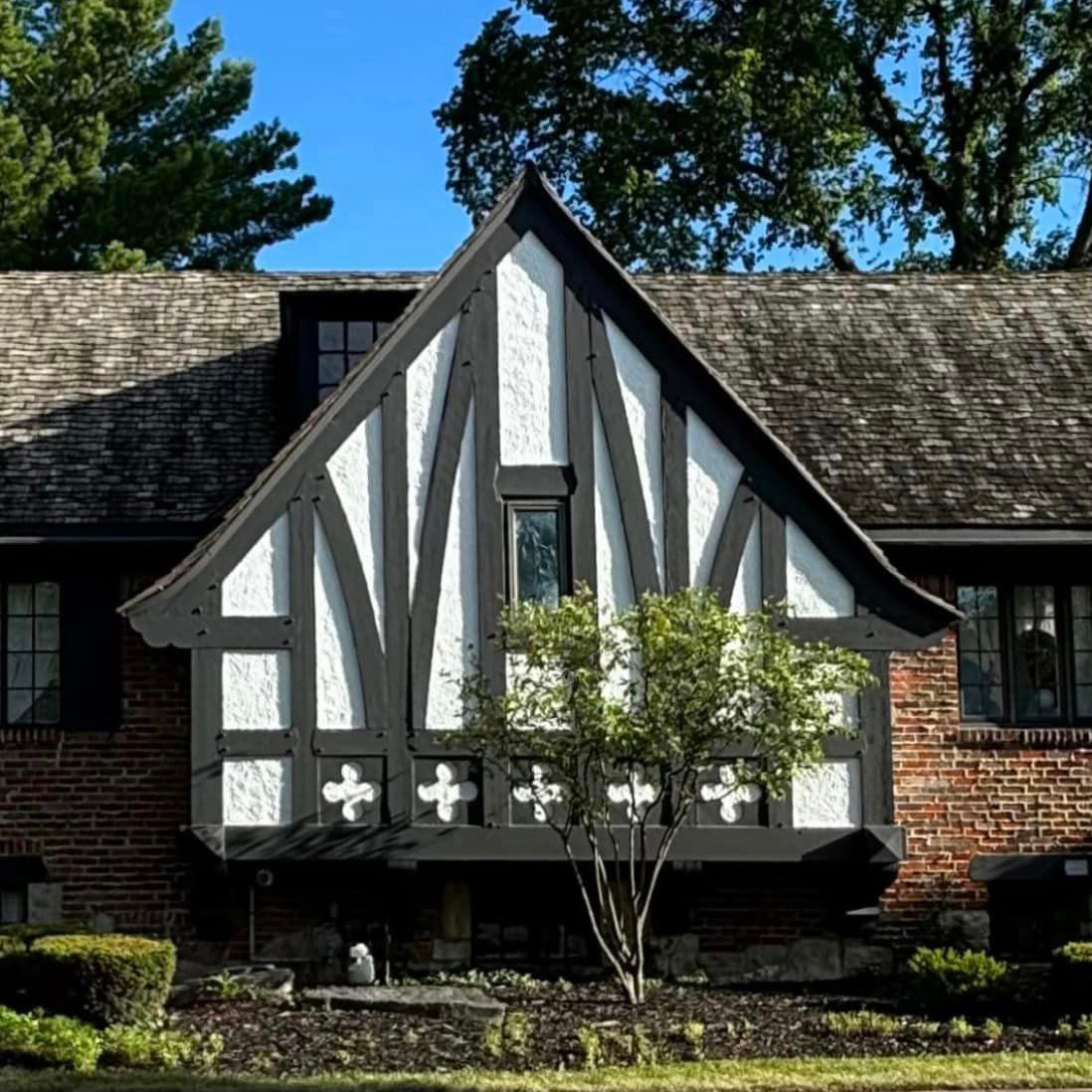
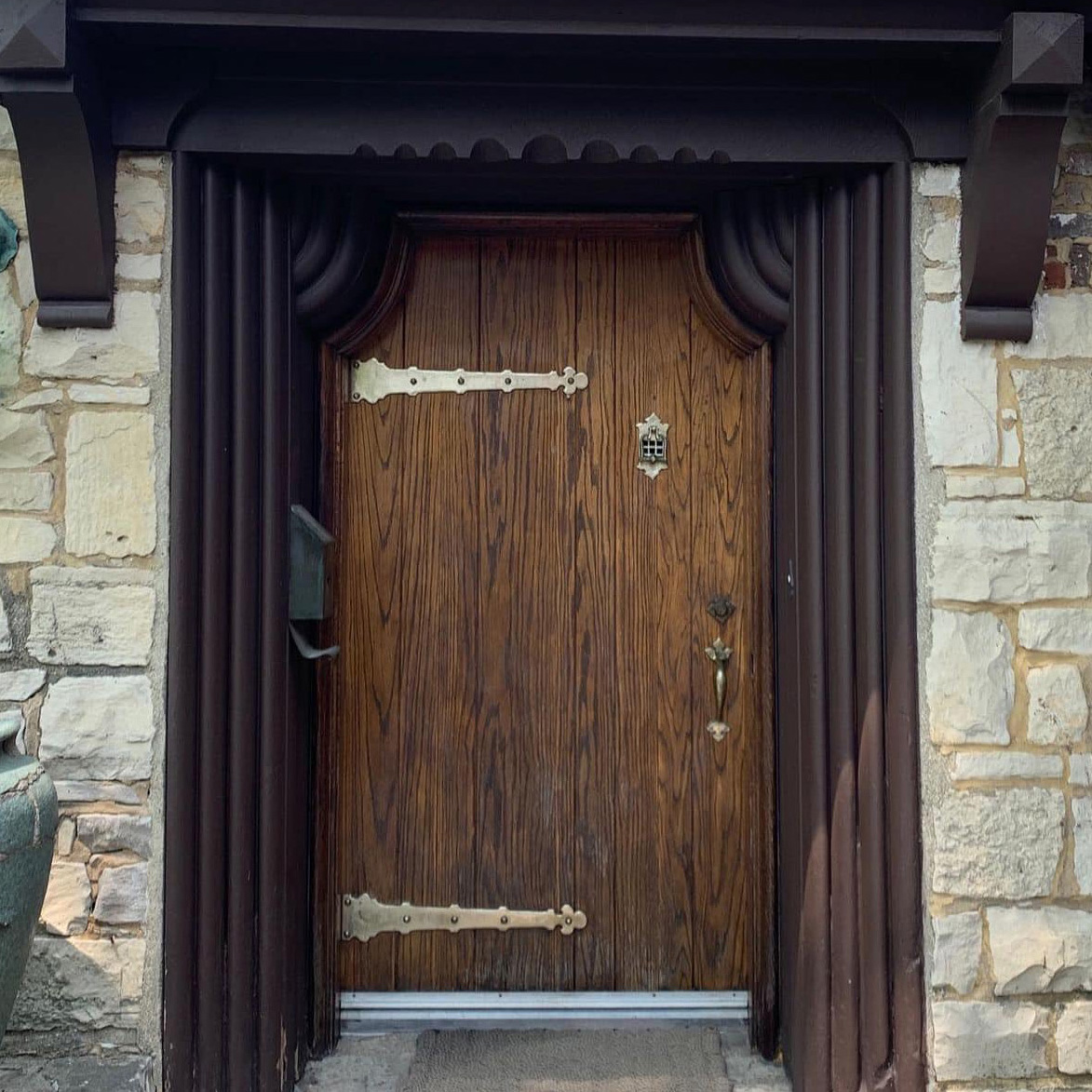
Historic Revival architecture became increasingly popular in the 1910’s and continued through the 1930’s. In 1925, well-known Hinsdale architect, R. Harold Zook, designed this charming English cottage, featuring many of the distinct Tudor elements for which his trademark Cotswold style cottages were known, including decorative half timbering, asymmetrical gabled roofs, exposed beams, leaded glass casement windows, rustic brick and stonework, and rounded overhanging roof shingles, aka the “Zook roof.”
Zook developed this unique roofing technique to create the appearance of a thatched roof with rolled eaves at the edges of the roof creating a curved transition into the walls below.
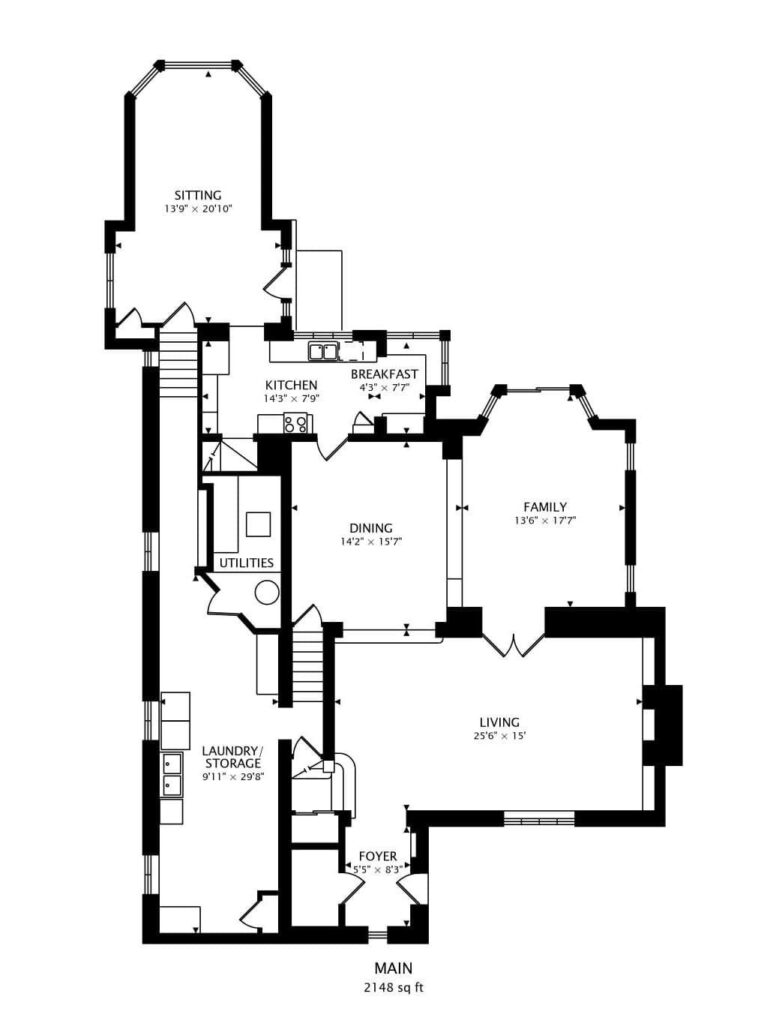
Erica was immediately charmed by the rich design, thoughtful details and impeccable craftsmanship so often missing from homes today. While the timeless Tudor character was very appealing, she quickly noted that the quirky layout might not appeal to all prospective buyers. Initially consulting the the seller, Erica offered suggestions for simple changes and decluttering and referred the seller to a knowledgeable historic home realtor, Tom Makinney of Makinney Group.
With his skilled guidance to best showcase and market the property, the home quickly sold!
Built in 1892, this impressive Shingle-Style residence, known as Shadeland, stands proudly at 280 S. Cottage Hill Avenue.
Lee Sturges and his wife, Mary, moved to Elmhurst in 1892 and built Shadeland that same year, raising their three children there. Sturges personally designed the home and oversaw its construction with the help of an architect.
A man of many talents, Sturges was a successful businessman, inventor, and internationally recognized artist. In 1893, he founded the Illinois Manufacturers Association and went on to secure patents for 20 inventions, including the personal-sized etching press in 1916. This innovation helped revive the art of etching by allowing artists to work independently. Despite his business endeavors, Sturges remained deeply devoted to art and even added a studio to his home. He became an internationally known artist and etcher, celebrated for his depictions of outdoor scenes. Over 400 of his works are cataloged in his complete collection, with many housed at the Elmhurst History Museum.
Shingle-Style architecture is defined by its continuous, flowing “skin” of wooden shingles that seamlessly wraps around corners and curves over towers and porches, giving the home a sculptural and rustic appearance. While similar in shape and form to the Queen Anne style, Shingle-Style homes feature minimal decorative detailing, allowing the natural texture of the shingles to shine. Popular between 1880 and 1900, the style emphasizes horizontal lines and harmony between the home and its natural surroundings.
Shadeland’s solid base is constructed of rough-faced ashlar limestone, complemented by a striking limestone chimney that anchors the center of the front façade. The recessed front porch, with its graceful round-arch openings, is echoed in the second-story sleeping porch above. Remarkably, the home has undergone only minor alterations and retains an exceptional degree of historic integrity.
Sturges’ father, Frank Sturges, also built a notable home in the early 1890s on a generous 15-acre estate bounded by St. Charles Road, Church Street, York Street, and Cottage Hill Avenue. The estate was subdivided in the late 1920s to make way for residential development, and the original home was demolished. Today, two historic stone pillars — once marking the entrance to the Frank Sturges estate — can still be seen in a yard at the southwestern intersection of Elmwood Terrace and York Street.
Listed on the National Register of Historic Places, this early work of renowned architect Frank Lloyd Wright can be found at 301 S. Kenilworth Avenue.
The Henderson House was one of Frank Lloyd Wright’s earliest Prairie style homes and the only work in Elmhurst. Wright was commissioned to design this home for Chicago businessman Frank B. Henderson, and completed the design while in partnership with architect H. Webster Tomlinson in 1901. Construction of the home was completed in 1905 and incorporates all the elements associated with the iconic prairie style that Wright made so well-known.
Frank Bignell Henderson, who commissioned this home, was born in Cincinnati in 1863. He married his wife Nellie, of Chicago, and they purchased the lot from William H. Emery. They lived in the home until 1908 when they moved to Indiana. The Henderson Family only spent a few short years in this home; but since then there have been several homeowners.
Over the years, the house had seen major alteration; most notably in the 1960s, the homeowners added an enclosed sleeping porch over the south terrace that reportedly infuriated Wright. In 1988, notable stewards of this home were David and Joyce McArdle. The McArdle’s were responsible for the extensive restoration of the home, which they did working with Don Kalec, the director of the Wright Home and Studio in Oak Park. The Henderson House today remains as it was originally designed by Wright with few exceptions.
The interior floor plan is similar to that of the Warren Hickox House, although the exteriors are very different. The plan of the house is also similar, in the main living spaces, to the Edwin H. Cheney House of Oak Park. The home has one large space subtly divided into library, living room, and dining room, all in-line. A large veranda off the living room overlooks the over one-half acre of landscaped grounds. The house has over 80 art glass windows, elegant woodwork, three brick fireplaces, and many built-ins.
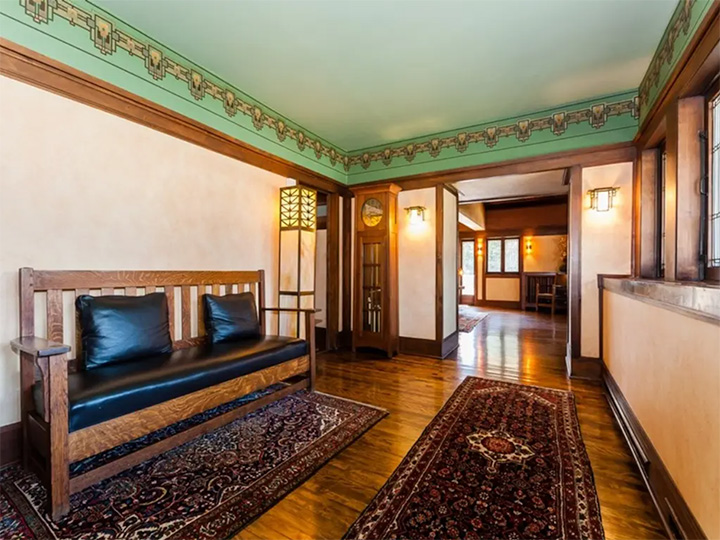
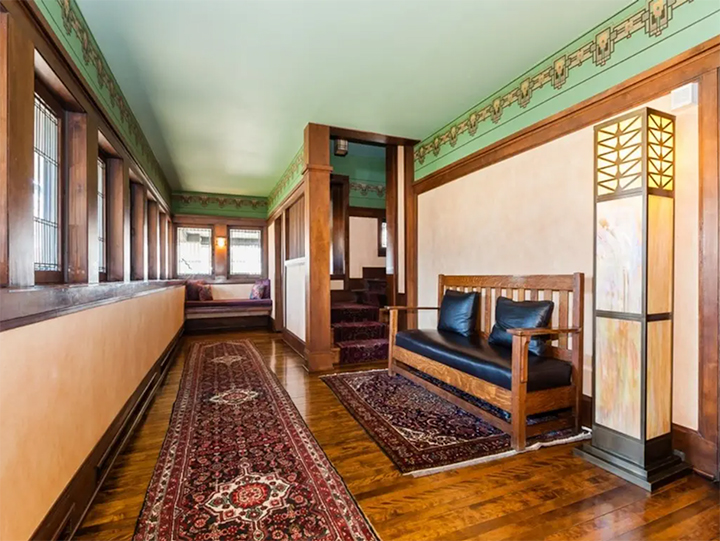
The McArdle’s also handled the legal filing of the articles of incorporation for the newly formed Frank Lloyd Wright Building Conservancy. In 2019, the homeowners of the Henderson House donated a preservation easement to the Frank Lloyd Wright Building Conservancy, which is credited as a major step in preservation protection for this home.
While there is so much to be said architecturally about this home and its famous designer, this feature highlights the preservation history of this home. The impact of this restoration and preservation story can be felt locally, but also nationally and internationally thanks to the creation of the Frank Lloyd Wright Conservancy.
Although this is the only design still standing in Elmhurst, it was not Wright’s only design in the city. According to the Frank Lloyd Wright Trust, the Thomas E. Wilder Stable Building was also designed by Wright’s Oak Park Studio. It has been suggested that Walter Burley Griffin, who played an important role in Wright’s Oak Park Studio, had a heavy hand in the design of the Stable building. The Stable building was demolished in 1941.
A local historical favorite and recent preservation success story can be found at the Zook House, a Tudor Revival English Cottage, located at 231 S. Arlington Ave.
Historic Revival architecture became increasingly popular in the 1910’s and continued through the 1930’s. In 1925, well-known Hinsdale architect, R. Harold Zook, designed this charming English cottage, featuring many of the distinct Tudor elements for which his trademark Cotswold style cottages were known, including decorative half timbering, asymmetrical gabled roofs, exposed beams, leaded glass casement windows, rustic brick and stonework, and rounded overhanging roof shingles, aka the “Zook roof.”
Zook developed this unique roofing technique to create the appearance of a thatched roof with rolled eaves at the edges of the roof creating a curved transition into the walls below.
Erica was immediately charmed by the rich design, thoughtful details and impeccable craftsmanship so often missing from homes today. While the timeless Tudor character was very appealing, she quickly noted that the quirky layout might not appeal to all prospective buyers. Initially consulting the the seller, Erica offered suggestions for simple changes and decluttering and referred the seller to a knowledgeable historic home realtor, Tom Makinney of Makinney Group.
With his skilled guidance to best showcase and market the property, the home quickly sold!
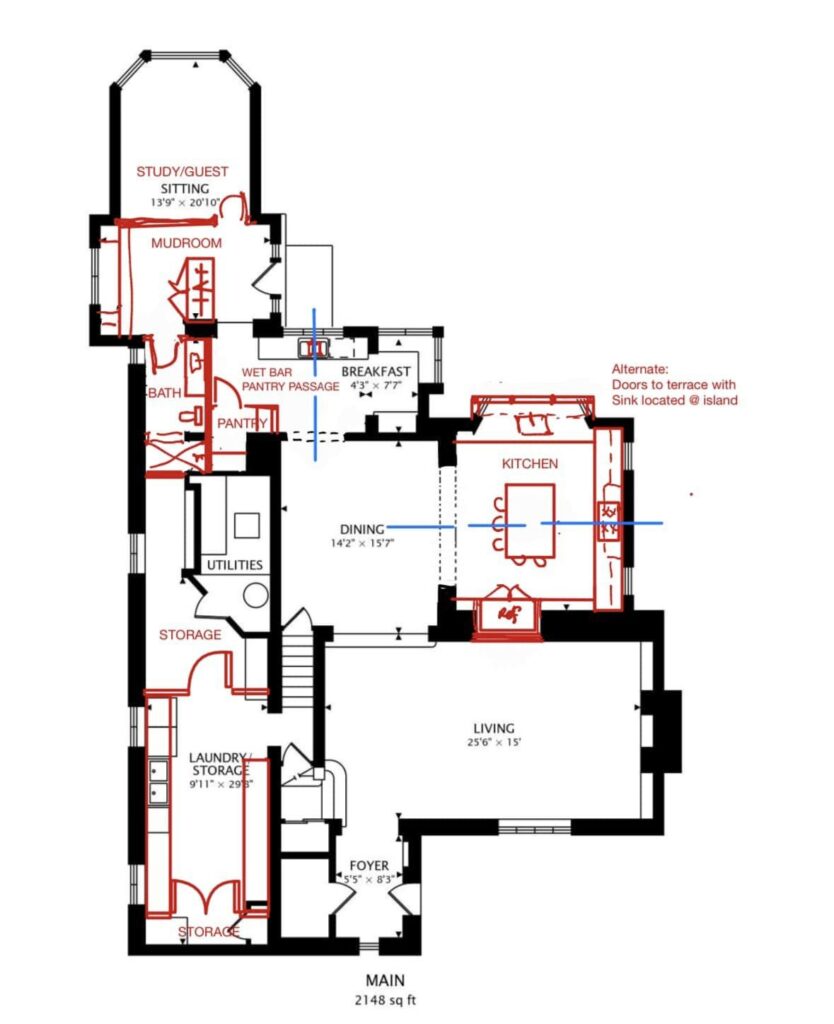
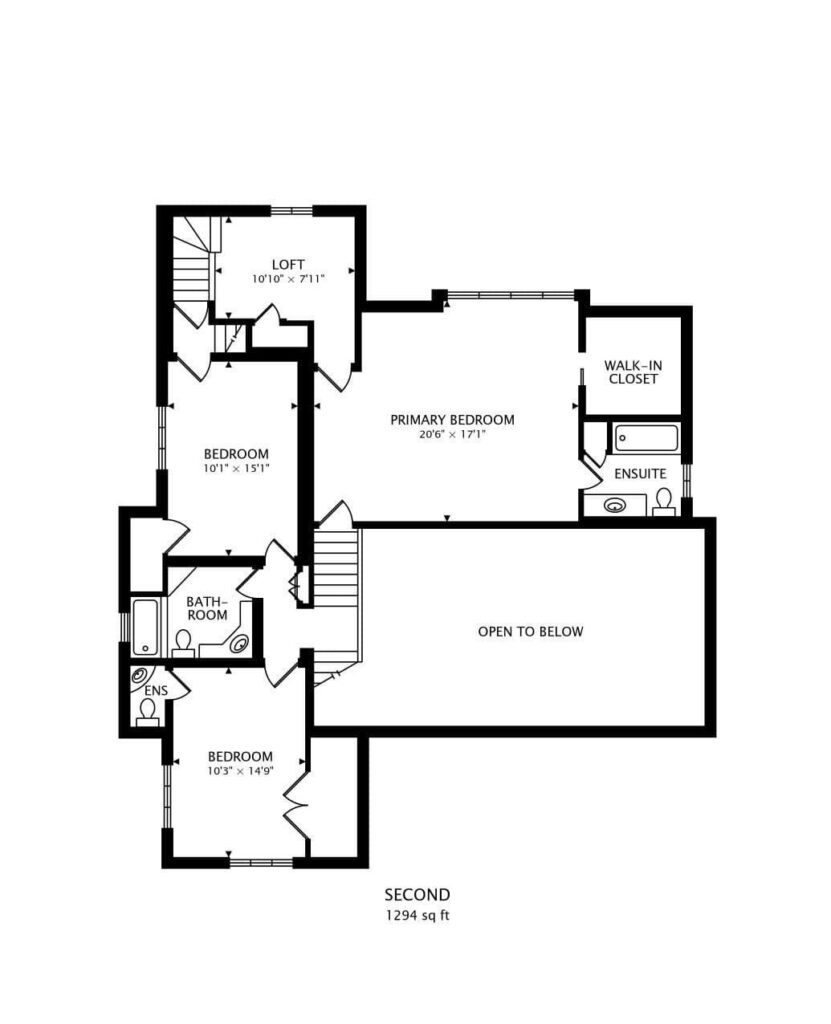
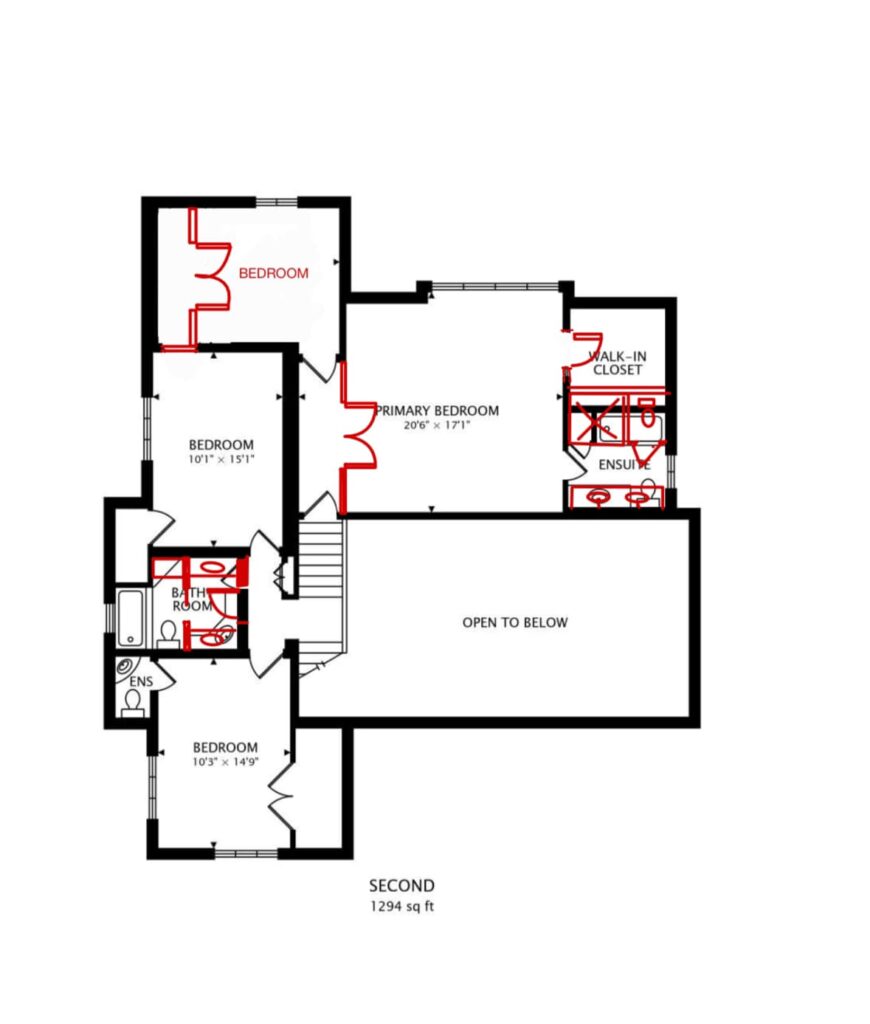
As part of this process consulting both the seller and eventually the new home owner, Erica provided simple plan sketches to show how a modest interior reconfiguration could increase the home’s contemporary living appeal, while avoiding an addition or window changes to keep the beautiful exterior fully intact as-is (See existing plans below with revisions in red.)
Built in 1892, this impressive Shingle-Style residence, known as Shadeland, stands proudly at 280 S. Cottage Hill Avenue.
Lee Sturges and his wife, Mary, moved to Elmhurst in 1892 and built Shadeland that same year, raising their three children there. Sturges personally designed the home and oversaw its construction with the help of an architect.
A man of many talents, Sturges was a successful businessman, inventor, and internationally recognized artist. In 1893, he founded the Illinois Manufacturers Association and went on to secure patents for 20 inventions, including the personal-sized etching press in 1916. This innovation helped revive the art of etching by allowing artists to work independently. Despite his business endeavors, Sturges remained deeply devoted to art and even added a studio to his home. He became an internationally known artist and etcher, celebrated for his depictions of outdoor scenes. Over 400 of his works are cataloged in his complete collection, with many housed at the Elmhurst History Museum.
Shingle-Style architecture is defined by its continuous, flowing “skin” of wooden shingles that seamlessly wraps around corners and curves over towers and porches, giving the home a sculptural and rustic appearance. While similar in shape and form to the Queen Anne style, Shingle-Style homes feature minimal decorative detailing, allowing the natural texture of the shingles to shine. Popular between 1880 and 1900, the style emphasizes horizontal lines and harmony between the home and its natural surroundings.
Shadeland’s solid base is constructed of rough-faced ashlar limestone, complemented by a striking limestone chimney that anchors the center of the front façade. The recessed front porch, with its graceful round-arch openings, is echoed in the second-story sleeping porch above. Remarkably, the home has undergone only minor alterations and retains an exceptional degree of historic integrity.
Sturges’ father, Frank Sturges, also built a notable home in the early 1890s on a generous 15-acre estate bounded by St. Charles Road, Church Street, York Street, and Cottage Hill Avenue. The estate was subdivided in the late 1920s to make way for residential development, and the original home was demolished. Today, two historic stone pillars–once marking the entrance to the Frank Sturges estate–can still be seen in a yard at the southwestern intersection of Elmwood Terrace and York Street.
Listed on the National Register of Historic Places, this early work of renowned architect Frank Lloyd Wright can be found at 301 S. Kenilworth Avenue.
The Henderson House was one of Frank Lloyd Wright’s earliest Prairie style homes and the only work in Elmhurst. Wright was commissioned to design this home for Chicago businessman Frank B. Henderson, and completed the design while in partnership with architect H. Webster Tomlinson in 1901. Construction of the home was completed in 1905 and incorporates all the elements associated with the iconic prairie style that Wright made so well-known.
Frank Bignell Henderson, who commissioned this home, was born in Cincinnati in 1863. He married his wife Nellie, of Chicago, and they purchased the lot from William H. Emery. They lived in the home until 1908 when they moved to Indiana. The Henderson Family only spent a few short years in this home; but since then there have been several homeowners.
Over the years, the house had seen major alteration; most notably in the 1960s, the homeowners added an enclosed sleeping porch over the south terrace that reportedly infuriated Wright. In 1988, notable stewards of this home were David and Joyce McArdle. The McArdle’s were responsible for the extensive restoration of the home, which they did working with Don Kalec, the director of the Wright Home and Studio in Oak Park. The Henderson House today remains as it was originally designed by Wright with few exceptions.
The interior floor plan is similar to that of the Warren Hickox House, although the exteriors are very different. The plan of the house is also similar, in the main living spaces, to the Edwin H. Cheney House of Oak Park. The home has one large space subtly divided into library, living room, and dining room, all in-line. A large veranda off the living room overlooks the over one-half acre of landscaped grounds. The house has over 80 art glass windows, elegant woodwork, three brick fireplaces, and many built-ins.
The McArdle’s also handled the legal filing of the articles of incorporation for the newly formed Frank Lloyd Wright Building Conservancy. In 2019, the homeowners of the Henderson House donated a preservation easement to the Frank Lloyd Wright Building Conservancy, which is credited as a major step in preservation protection for this home.
While there is so much to be said architecturally about this home and its famous designer, this feature highlights the preservation history of this home. The impact of this restoration and preservation story can be felt locally, but also nationally and internationally thanks to the creation of the Frank Lloyd Wright Conservancy.
Although this is the only design still standing in Elmhurst, it was not Wright’s only design in the city. According to the Frank Lloyd Wright Trust, the Thomas E. Wilder Stable Building was also designed by Wright’s Oak Park Studio. It has been suggested that Walter Burley Griffin, who played an important role in Wright’s Oak Park Studio, had a heavy hand in the design of the Stable building. The Stable building was demolished in 1941.
A local historical favorite and recent preservation success story can be found at the Zook House, a Tudor Revival English Cottage, located at 231 S. Arlington Ave.
Historic Revival architecture became increasingly popular in the 1910’s and continued through the 1930’s. In 1925, well-known Hinsdale architect, R. Harold Zook, designed this charming English cottage, featuring many of the distinct Tudor elements for which his trademark Cotswold style cottages were known, including decorative half timbering, asymmetrical gabled roofs, exposed beams, leaded glass casement windows, rustic brick and stonework, and rounded overhanging roof shingles, aka the “Zook roof.”
Zook developed this unique roofing technique to create the appearance of a thatched roof with rolled eaves at the edges of the roof creating a curved transition into the walls below.
Erica was immediately charmed by the rich design, thoughtful details and impeccable craftsmanship so often missing from homes today. While the timeless Tudor character was very appealing, she quickly noted that the quirky layout might not appeal to all prospective buyers. Initially consulting the the seller, Erica offered suggestions for simple changes and decluttering and referred the seller to a knowledgeable historic home realtor, Tom Makinney of Makinney Group.
With his skilled guidance to best showcase and market the property, the home quickly sold!
As part of this process consulting both the seller and eventually the new home owner, Erica provided simple plan sketches to show how a modest interior reconfiguration could increase the home’s contemporary living appeal, while avoiding an addition or window changes to keep the beautiful exterior fully intact as-is (See existing plans below with revisions in red.)